
Still More Flying Notes From Egypt
The Confessions of a Very Communicative Man

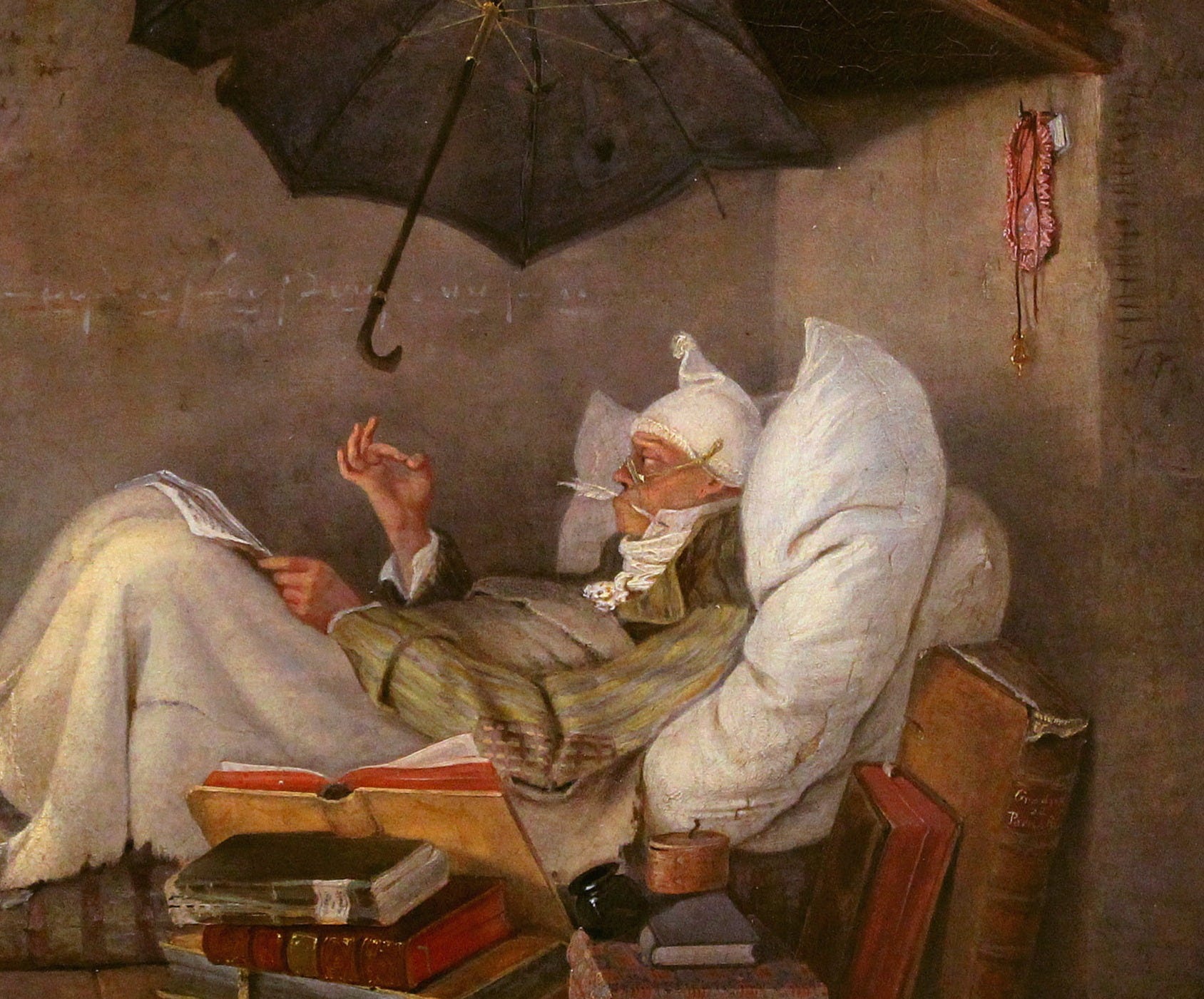
Warning: my Flying Notes are not essays you enjoy. They are essays you survive. (Read the previous installment here.)
1
The death of conversation, of true dialogue, of the sacrament of social communion that is real communication, is not a subject I approach lightly. I approach almost nothing lightly—lightness being, in my view, one of the great moral failures of our age, a point I have made elsewhere and at some length and which I will not repeat here except to say that I was right—but this subject in particular I approach with the gravity of a man delivering a eulogy for someone he loved and who, he suspects, was murdered.
I have been to dinner parties, and I have broken bread with educated and accomplished human beings, and I’m sad to report to you: nobody is talking to anybody. They are talking at each other, past each other, through each other, and occasionally about each other, but the one thing they are not doing—the one activity that the entire dinner party was invented to facilitate—is conversing.
I had resolved—and the resolution was, like all my resolutions, conceived in charity and executed in love—to give you an account of a certain evening I lately attended. I was invited—again, by means I have learned not to investigate lest I foreclose such future possibilities—to a dinner at the home of a man whose name I shall suppress out of that same Christian humility and gentle forbearance I so assiduously cultivate in all my social dealings; I will call him, for his and your protection, a New York Man. By this account I intended to demonstrate, with the rigor of Euclid and the bedside tenderness of a physician who has grown fond of the patient he is about to pronounce dead, that conversation—I mean conversation properly so called, the thing Socrates died of and Johnson dined on, the thing Castiglione thought could civilize a court and Augustine thought could carry a mother and son, leaning at a window in Ostia, halfway to heaven—is dead; deader than disco; that what now circulates under its name is a procession of monologues delivered serially into the air.
On said evening, I was placed by Providence, temperament, and training to perform the autopsy on dialogue. The account begins immediately. Or nearly immediately. There are one or two things you must know first.
By temperament, I say, because I am—and I offer this not really as a boast——though I do on occasion boast as all cultivated men do—— but as a datum, a fact about the very nature of reality—a listener. Augustine records his amazement at seeing Ambrose read without moving his lips, the first silent reader in Western literature, a man who could take in another’s words without immediately converting them to his own breath; I am, I have been told, the conversational Ambrose of our times, a man before whom others unburden themselves because they sense that nothing they say will be interrupted or dismissed. Some friends even call me the Confessor. I absolve no one, but I retain everything, and I have noticed—humility compels the observation—that the truly great listeners of history, the Ambroses or the priests behind the grille, share with me a certain quality of attention so total that the speaker eventually falls silent out of sheer awe, whereupon one is regrettably obliged to carry the conversation oneself, sometimes for the remainder of the evening.
You will ask, reader—and I cherish you, Madam or/and Sir, for asking so perceptively—how a thing so sturdy as conversation, which survived the fall of Rome, the Inquisition, the telephone, and hip-hop, could die in our lifetime. I will tell you. It died the way all sacred practices die, by being replaced with a private exercise that wears its clothes; for what passes now stands to true dialogue precisely as—as—but I see, reader, that you have completed the figure yourself, and completed it perceptively. For shame. I was speaking of masturbation, yes, but of masturbation in the rhetorical sense, in which the seed of speech is spilled upon the ground where no other understanding can receive it, and nothing is begotten—a barren expenditure, a fruitless, solitary discharge made possible only through the fancies of one’s own self-told imagination.
Now. Where was I? Ah, yes, the dinner. The table was set beautifully. I will grant my New York Man that. The napkins were folded in that manner which suggests either genuine cultivation or a recent viewing of a YouTube tutorial; I have my suspicions but will keep them to myself, for I am a charitable man, and it costs me nothing to assume the best of people’s napkin folding.
I was seated beside a woman who worked in—what was it?—strategic communications, a field whose very name is a contradiction, since in my experience the people who work in communications are the least communicative people alive, and the addition of the word “strategic” only means they have systematized their incapacity—and across from a man who had recently returned from a conference in Davos, a fact I know because he mentioned it four times in the first five minutes, which I counted, not because I am petty—though I am sometimes petty, as all honest men are—but because by the third mention I had become scientifically interested: was there a pattern? Was there a rhythm? Was this a compulsion, a tic, a liturgical recurrence, a verbal rosary he was fingering under the table of his own self-regard?
Of the seventh invocation of Davos itself—its occasion, its astonishing pretext, and what it disclosed concerning the relationship between Swiss altitude and American, coastal self-regard—I shall say nothing here, for it deserves an essay of its own, which I have begun.
Where was I? The soup, I believe, had not yet arrived. It does not arrive in this note either, as you will shortly discover, and through no fault of the soup.
I attempted conversation. Genuine conversation—the kind in which one person says a thing and the other person responds to that thing, and the first person is altered, however slightly, by the response, and something is built between them that neither possessed alone. I made a point—a rather good point, I think, about the relationship between political rhetoric and the decay of public memory, which itself is a fictive political object. It was, if I may say so, the sort of observation that deserved a brief, appreciative silence—just a beat, a breath, the conversational equivalent of letting a fine wine rest on the palate before swallowing—before a thoughtful reply.
What I received was: “Totally.”
“Totally.” That was it. The entire harvest of my carefully cultivated thought, the compressed fruit of decades of reading and reflection and, yes, suffering—for one does not arrive at such insights without having suffered, and I have suffered, dear reader, not ostentatiously, not with the performative anguish of the performatively wounded children of Orientalism, no, no, no, but quietly, in the manner of a man who keeps his bleeding internal—all of it, met with “totally,” spoken with a rising intonation that suggested the verbal equivalent of a loading screen: please wait while I queue up my own entirely unrelated and uninteresting remark.
And indeed, before the second syllable had finished dying its ignominious death, the Davos man pivoted. “That reminds me,” he said, though it reminded him of nothing, for what followed bore no relation whatsoever to what I had said. It was related only to what had already been composing itself inside his skull while I was speaking—for he had not been listening; he had been preparing—“That reminds me of a panel I was on in Davos.” Fifth time. I stopped counting. Some data sets become redundant.
—I must pause here to observe that “that reminds me” is among the most dishonest phrases in the English language, rivaled only by “with all due respect” and “having said that.” The phrase pretends to be a connection—as though the speaker’s mind has been so stimulated by your contribution that it has leaped, via some dazzling associative chain, to a related thought. But it is not a bridge but a trapdoor. “That reminds me” is the hinge on which the conversation swings away from you and toward them, and the “that” in question is never what you said; it is simply the fact that you have stopped talking, which has reminded them that it is now their turn, which is the only thing they were waiting for.
The strategic communications woman, meanwhile, had begun emitting a rapid sequence of sounds while the Davos man was mid-sentence—“mhm, mhm, mhm”—fired in staccato bursts, each one landing slightly closer to the tail of his clause, like a car inching into an intersection before the light has changed. Do not be deceived, my dear reader. The “mhm” is not the sound of agreement; it is the sound of a piston chambering. And then—before he had even arrived at the verb of his sentence—“and, and—” She said this. “And, and—” As though his sentence and hers were continuous, when in fact the “and” connected nothing to nothing; it was a crowbar inserted into the first hairline crack in his syntax, a forced entry performed in broad conversational daylight, and what followed—a remark about a podcast, of all things—bore no relation whatsoever to anything he had said, which itself bore no relation whatsoever to anything I had said. The “and” was, in fact, a hijacking of a hijacking; a stack of non-sequiturs, each monologue parasitic on the previous one's corpse. And the Davos man did not even notice. He had not been speaking to her. She had not been listening to him. They were two performers on the same stage who happened to be facing the same poor audience—which was me, sitting between them, the only person at the table who had come to converse and who was now watching, with the quiet horror of a man who has arrived at a dance and discovered that everyone is dancing alone.
—It occurs to me, as I write this, that the podcast recommendation has become the modern equivalent of the religious tract: unsolicited, immune to context, and distributed by people who believe they are saving you. “Have you heard the good news? It’s a six-part series.”—And I will confess to you, reader, that the very sentence I have just written pleases me—“unsolicited, immune to context, and distributed by people who believe they are saving you”—that is a rather fine tricolon, a pleasing persistence of plosives—What a patter of p’s that I did not entirely plan but which arrived, as such things do, as a gift from whatever faculty it is that governs these felicities in a man of my learnedness and my constitution.—I am not boasting but merely observing. A scientist does not boast about his data; he records it. The sentence was good and I am merely its humble stenographer.——Where was I?—
Ah yes. The podcast. I smiled. What else could I do? I have developed, over the years, a smile specifically for these occasions—it is not the smile of pleasure, nor of politeness, nor even of concealed contempt, though it has been mistaken for all three. It is the smile of a man watching a civilization end, one monologue at a time, and finding in the spectacle a kind of terrible beauty—the way one might admire a collapsing building even as one mourns it.—Have I mentioned my idea for a coffee-table book on decay? I must have. In a previous essay, I think, and the response was gratifying: several readers wrote “great idea!” and then nothing happened, which is its own form of decay, and in that sense they have contributed to the project more than they know. I have since expanded the vision. The book, which I am now calling Decay: A Visual Meditation—the colon is essential; no serious book of photography can be taken seriously without a colon in its subtitle—will now include an entire chapter on conversations: photographs of dinner tables after the guests have left, the wine rings on the tablecloth, the napkins crumpled and abandoned, dirty plates, the chairs pushed back at angles that betray how eagerly their occupants fled the scene. The final image in this chapter: two chairs facing each other, both empty.——
Sir, I observe that you have been skimming. Do not deny it; I can always tell. You skipped the passage on Ambrose, did you not, on the grounds that it looked like background. Go back and read it. I will wait. The whole argument is in it, and you will be lost in the later parts without it, and I decline to be blamed for your confusion at the very moment of my vindication.
Now—Madam, at least, has remained faithfully with me, for I have found the womenfolk to be my most faithful readers—where was the dinner? For I am aware, with some astonishment, that we have been seated at this table for several pages and the soup has still not arrived, and neither has the account I promised you with the rigor of Euclid. I have just reviewed what I have written and I find it is largely concerned with me—which is fitting, in a way, since I was the only person at that table listening, and an account of the evening’s listening is therefore necessarily an account of myself; but the fact remains that the first course, the apocalyptic question I deployed at the cheese, the extraordinary scene that unfolded when our host proposed we go around the table and each share one thing we were grateful for—what I said, what followed, the quality of the wine, why one guest departed before the main course, and what the departure revealed about the state of gratitude in the professional classes—all of it remains untold, and must now remain untold a while longer, for I have reached the end of the space my discipline allots to a single note, and a man who will not respect his own design cannot expect his readers to respect his conclusions.
The dinner itself, then, I postpone—and if you protest, reader, that the preliminaries were digressions, I answer that digressions are the very sunshine of an account such as this one, the life and soul of it; take them out, and a cold eternal winter reigns over every page; restore them to me, and I am a bridegroom. The dinner will return when you least expect it and I am better rested. And no, in case you are wondering, it is not lost on me—a man as self-aware as I am misses nothing—that I have just delivered several thousand words on the death of conversation without permitting a single soul to get a word in, including the dinner. The observation has been recorded. It will be addressed. There is an essay in it.
For now, let us attend to more pressing humiliations.
2
You are expecting the dinner. You shall not have it yet, dear reader—a more pressing humiliation has intervened, and chronology, as I have explained elsewhere—you would know this, had you been a paid subscriber, but I forgive you, forgiveness being among the few things I still give away—is the tyranny of the clock over the truth.
I was approached, some months ago, by a young man—one of those people whom I maintain in my life the way a museum maintains its lesser holdings, not necessarily because they are remarkable, they usually really aren’t, but because discarding them would raise questions about the collection’s integrity—who wished to consult me on a matter of some personal gravity. He was considering leaving his career to pursue, as he put it, “something more meaningful.” He wanted my advice.
My advice. Let the reader appreciate the weight of this. A young man, standing at the crossroads of his life, turns not to the internet, not to a podcast—the death of civilization— not to ChatGPT—but to me. To a man who has thought more deeply about vocation, purpose, and the relationship between the life of the mind and the life of action than almost anyone this young man is likely to encounter in his natural span on earth. I do not say this with pride. God forbid. Pride is the fall. I say it with the sober humility of a man who has spent years in deep thought and who knows, therefore, what he knows, and knows also—which is rarer—what that knowledge is worth, which is a great deal, though the market does not always reflect it, the market being, as I have observed elsewhere, a poor judge of value, which is why it prices hedge-fund managers above poets, a catastrophe of civilization from which we may never recover, though I will not belabor the point, having belabored it elsewhere to, I should say, insufficient recognition.
Here, at last, was a young person who understood that the important questions of life require a true sage.—And here I must confess to a sudden and terrible complication, for the reader will recall that I recently plucked a gray hair from my beard on the grounds that it was premature, a trespasser, a stolen valor of wisdom I had not yet earned. I argued, with what I still maintain was impeccable logic, that to keep it would be to impersonate an elder, to wear the costume of sagacity before one had been fitted for it. Very well. The logic was sound. But now—now!—a young man was sitting before me, consulting me as a sage, addressing me with the reverence due to a sage, effectively conferring upon me the very office whose badge I had just destroyed. He had come seeking a gray-bearded counselor, and I had, weeks earlier, eliminated the single piece of evidence he was right. Did this mean I must now cultivate the gray? Encourage it? Welcome the next one, and the one after that, and allow my chin to acquire the gravitas I had denied it? The thought filled me with a dread I am not equipped to describe, for it would mean I had been wrong—not morally or intellectually wrong, that is silly, but temporally wrong, wrong in my scheduling, wrong about the timetable of my own wisdom, which is the most humiliating form of error available to a man of my predictive wisdom. I resolved to think about it later. Some crises must be deferred.— Or at the very least, someone approximate to a sage. Or at the very, very least, someone who has read more books than the average person, which is a bar so low it constitutes a tripping hazard, but we must begin somewhere.
I told him I would need time to reflect. This was partly true—the question deserved reflection—and partly strategic, for I have learned that wisdom delivered too quickly is mistaken for opinion, whereas wisdom delivered after a suitable delay is received as judgment, and the difference between opinion and judgment is the difference between a paper napkin and a linen one: functionally identical, ceremonially worlds apart.
—I must digress here to note a growing crisis in the culture of advice-asking. People no longer know how to ask for advice. They approach you with the question already half-answered, their minds already three-quarters made up, and what they want from you is not counsel but ratification—the rubber stamp of someone they consider serious enough to dignify a decision they have already taken. I have been used in this way more times than I can count, and the indignity of it is bottomless, for it transforms the advisor into a notary public: a man whose wisdom is not sought but whose signature is. You are just being asked to cosign. But I did not suspect this yet. I was still innocent. The fall was coming, but the garden was still green.——
I reflected for three days. Three days, reader. I cleared time in my schedule—and my schedule, I should say, is the schedule of a man who is perpetually overcommitted precisely because he cannot say no to the demands of his own intellect, which generates more tasks than any single human life could execute, a fact I consider—in humility—not a burden but an honor, a superabundance of vision that would be a gift to the world if the world had the wisdom to receive it, which, as we are discovering, it does not.—I cleared time. I sat in my study. I consulted sources despite the fact that I did not need them—the essential insight was already available to me from my own reserves— because I wanted to dignify the young man’s question with the full ceremony of intellectual seriousness. I wanted him to feel that his crossroads had been met with the sincerity it deserved, and if I am honest—and I am always honest, sometimes to my own detriment, a detriment I bear stoically—I wanted to produce something worthy of myself. A piece of counsel so complete, so lapidary, so perfectly calibrated to his situation that he would carry it with him for the rest of his life and, in his later years, tell his own children: “Once, when I was young and lost, Hussein sat me down and said to me—” and here he would repeat my words, verbatim, the way the disciples of the great rabbis preserved the sayings of their masters, because some words, once heard, become permanent furnishings of the soul.
—Is this grandiose? Perhaps. But the alternative is to treat the advice casually, to toss off some remark between sips of coffee, and this I refuse to do, not from vanity—though vanity, as we established in my previous writings, is never entirely absent from my behavior, a fact I disclosed with such devastating honesty that I should think it has immunized me from further accusation on the subject—but from respect. Respect for the question. Respect for the young man. Respect for the ancient and nearly extinct tradition of one human being actually transmitting something of value to another through the medium of speech, a tradition so endangered that it should be protected by international treaty, and if the UN had any sense—which it does not, and I say this having studied its corruption with the same metacritical attention I bring to everything—it would classify genuine advice as an intangible cultural heritage, alongside Mongolian throat singing and the art of Neapolitan pizza, both of which are, admittedly, more widely appreciated than my advice, though I would argue less nourishing.——
We met at a cafe. I do not frequent cafes as a rule; they are too loud, too aesthetically liberal—by which I mean hollow and meaningless, which is what aesthetic liberalism always means in the end—and the coffee requires answering more questions than a doctoral defense. Hot or iced? What size, and in whose naming convention? What milk, and from which mammal, or which nut, for we have now extended the concept of milk so far beyond its biological origins that the word has become a metaphor for itself? Do I want room for cream? Do I want it for here or to go? Would I like to add a shot? Would I like to round up for charity? I would like a cup of coffee. Plain. Hot. In a cup. That this requires negotiation more painful than the ones with the Iranian Revolutionary Guard tells you everything you need to know about a civilization that has lost the capacity for conversation: it cannot even order a beverage without turning the simple transaction into a failed attempt at stillborn dialogue it does not know how to have. But the young man had suggested a cafe, and I consented, because a sage must sometimes descend to the conditions of those he serves—Moses came down from the mountain, didn’t he? He did not ask the Israelites to climb up—and also because the cafe was near my barber, and I had an appointment afterward, a conjunction of errands that I mention because it demonstrates my practical efficiency, a quality that coexists harmoniously with my intellectual depth, the two being complementary rather than contradictory, whatever certain critics—I know who you are—may think.
I sat him down. I ordered a coffee I knew would disappoint me—I was right; it was overpriced, thin, and acidic, a coffee that did not have any reason to believe in itself and yet was liberally narcissistic—and I began. What is life but an endless series of disappointments?
I spoke for perhaps forty minutes. I will not reproduce the whole of what I said, partly because it would require its own essay, and partly because I do not wish to give away for free what was, in effect, a bespoke philosophical counsel that, had I any commercial instinct whatsoever, I would have invoiced. But the gist was this: that the question “should I leave my career for something meaningful?” was itself the disease posing as its own cure, because it assumed that meaning was a destination one could travel to, a city on a map one reaches by leaving the city one is in, when in fact meaning is not a place but a posture of the soul, and the man who cannot find it where he stands will not find it where he is going. I told him that “meaningful” had become a consumer category—like “organic” or “artisanal”—a label affixed to certain lifestyles to distinguish them from other lifestyles, when in truth the distinction is wholly fictitious. The man who leaves his desk and the man who stays at his desk are not, before God, distinguishable by the meaning of their occupations but only by the seriousness with which they inhabit them. I told him that the entire vocabulary of “finding yourself” and “following your passion” and “living authentically” was the vocabulary of a solipsistic culture that had replaced vocation with preference, calling with appetite, and the question “what is demanded of me?” with the question “what do I feel like?”—and that the second question, however sincerely posed, will never produce an answer that satisfies, because the self that asks it is the same self that must be transcended for the answer to mean anything, which is why the people who talk most about “finding themselves” are always still looking, and will be looking when they die, because the self is the disease and not the cure, and what they needed was never to find themselves but to forget themselves in the service of something that did not ask their permission and did not require their enthusiasm.
—And here I was, I admit, warming to the subject considerably; I could feel the rhetorical temperature rising in the way one feels a sermon gathering force, and I was aware—I am always aware, for self-awareness is among my most finely developed faculties—that I was no longer merely advising the young man but testifying, delivering a witness, and that the forty-minute advice had become, in its way, a small oration on the structure of the moral life, which is what happens when you consult a man like me on what you think is a practical question: the practical question is a door, and behind it is the room you did not know you were entering, and in that room is everything.——It was, I say without false modesty—and all my modesty is genuine, or at least genuinely intended, which is close enough—it was magnificent.
I finished. I took a sip of the disappointing coffee. I waited.
The young man looked at me. He nodded slowly. He said: “That’s really helpful.”
“That’s really helpful.” Three words. I had given him forty minutes of concentrated wisdom—the residue of a lifetime’s reading and suffering and reflection—and he had received it the way one receives a weather forecast: useful, briefly, and already fading. A total non-reception.
And then—and this was the true catastrophe, the catastrophe behind the catastrophe—he added, with serene confidence: “I’ve actually been talking with my life coach, and she says something really similar.”
His life coach. She says something really similar. My forty-minute oration on the structure of the moral life—drawing on sources the life coach has never heard of and addressing questions the life coach does not know exist nor could imagine exist—had been filed, in his mind, alongside the life coach’s remarks, as though the two were in the same category, adjacent products on the same shelf. I was the artisanal version of his life coach. The hand-crafted, small-batch variant of a service, also available, presumably, in a more convenient format, with flexible scheduling and an app.
He had already decided, of course. Before he sat down. Before I ordered the coffee. Before I spent three days in my study, consulting sources. He had already decided, and what he had wanted from me was not my counsel but my audience—not my wisdom but my attention, which is to say, my silence while he rehearsed his decision aloud in the presence of someone he considered weighty enough to lend it a dignified approval. He had come to me for the experience of having consulted a serious person, and now, having had the experience, he could proceed with whatever it was he had already chosen and tell himself.
I smiled, of course. I told him I wished him well. I meant it, in the sense that I did not wish him active harm, which is as close to goodwill as I can manage toward a man who has just used me as a prop in the theater of his own decision-making.
—And here I anticipate the loyal reader, the one who is now thinking: this is the anchor all over again. The gift that was not received as a gift. And that reader would be right—partly right—for the pattern is the same: I offer something of weight, and it is treated as decoration. But there is a difference that matters. The anchor was unsolicited. I chose to give it. The young man asked. He came to me. He sat me down and said, “I want your advice,” and what he meant was, “I want the feeling of having sought your advice,” and those two things are as different as prayer and its performance, as different as a vow and its recitation, as different as real intercourse and masturbation—and the gap between them, that gap, is the subject of this essay, and we are only beginning to see how deep it goes.—
I went home. I slept the sleep of the unheard, which is a shallow and bitter sleep, full of dreams in which one is speaking and no one is there, the words dissolving into the air like smoke from a sacrifice that has not been accepted.
3

I am a man who abhors solipsism. I abhor monologuing. I am a very communicative man. A man who knows how to listen. I really am. I am, if anything, too attentive to the words of others—absorbing them, weighing them, turning them over in my mind with the care of a jeweler examining a stone for fractures. Those who have read my previous writings know how seriously I take the act of attending to another human being—I have written whole passages on it, passages which I flatter myself were rather penetrating, though of course it is not for me to say, and I mention it only so you understand the gravity of what I am about to confess.
