
More Flying Notes From Egypt
The Confessions of a Very Modest Man


1
How does one deal with underrecognition, misrecognition, and no recognition at all? How do we soothe such gaping wounds to ourselves—wounds which, I should add, bleed internally and therefore stain nothing but the soul, which nobody sees anyway, and so one must go on making pleasant conversation while hemorrhaging invisibly into one’s hors d’oeuvres?
I had to deal with those pains for a long time before I found my own way out of them. You see, I occasionally get invited to certain professional, community, and society events—how I get invited is itself a minor mystery I have never investigated, for fear that investigating it would terminate the invitations. And despite everything I am about to tell you, I keep attending them, which says something. Something about what exactly? We should investigate later. But now let us attend to the hemorrhaging wound.
For a long time, I would go to these affairs, and the moment I introduced myself, my night was ruined. Often—most often—people would have no idea who I am. No recognition whatsoever. A blank stare, a polite nod, that particular tilt of the head which signifies I am now calculating whether you are worth the next four minutes. Have you not heard of me? At this event? Do you read? Have you been paying attention to anything? I begin to question whether they belong here—though of course I say nothing, for I am a gracious man, and it is not their fault that their knowledge has been inadequate.
They ask what I do, and so I tell them briefly, and then—then—they begin praising me. Praising me! Seriously? Do you think you can even begin to grasp my brilliance sufficiently to praise me for it? Do you think you possess the requisite instruments—whether cognitive, spiritual, or aesthetic—to start appreciating me, my genius, adequately? The presumption! The gall! The aggression! The folly of men! To praise is to place oneself above the object of praise, or at the very least alongside it, and what gives you—who thirty seconds ago did not know I existed—the standing to pat my head with your admiration?
Far more insulting, this, than any unrecognition. At least unrecognition is honest. At least the void makes no claims upon one’s interior. And yet—worse still—if the person actually does think they recognize my name. “Oh, yes, I’ve heard of you! You’re the one who—” and here follows some grotesque reduction, some funhouse-mirror summary of my life’s work that I must now smile at, as though they have handed me a gift rather than a taxidermied version of my soul with the eyes put in wrong.
How miserable! Yes, I may not mind being known, I welcome it, rightly done, but I’m terrified of being known incorrectly.
This ruined my social life for so long—making every such occasion an agony, a via dolorosa through the mezzanine—much more agonizing, I should say, than the woman who once insulted me in my own home with her frictionless language, praising the aesthetics of my “space” and my “partner,” as though both were furniture she was evaluating for an eventual estate sale—and instead of kicking her out, which retrospectively I should have done, I settled on serving her the most inferior bottle of wine I possessed, a 2019 something-or-other I had been given by someone who clearly did not know the first thing about wine—just why and how I keep the company of such philistines should make clear to you, reader, that despite any impression you might get about my snobbery, I am, in fact, a modest and humble man who does not judge men or women by their palate education, or lack thereof, unless they are engaged in deep self-deceit about it—which I had kept specifically for such emergencies, and she drank it and complimented it, which only confirmed everything I thought of her. Case closed—
I’m digressing. Where was I? Ah yes. The agony. It threatened my social existence altogether. What should I do to be saved from this? I did not want to hurt people. After all, I am a very modest man.
Thus I resolved upon the only way out, I call it strategic unremarkability: to go even deeper into unrecognition, completly hide from people, thereby saving both myself and my poor conversants the humiliation—sparing them the indignity of exposing their inadequacy, and sparing me the indignity of witnessing it.—Some critical reader might smirk with the suspicion that this is merely pride which I am masquerading as compassion for others. I resent such a tone. A hurt, bleeding man should not be abused in this way at the moment of his difficulty. I am simply finding a merciful solution for others as much as for myself. Far from arrogance, hiding my genius is an act of charity.— So, I would say the most dead-ended, uninteresting, banal, and unremarkable things: “Oh, I was just invited by a friend.” Or “Oh, I just write about rather uninteresting things, really.” Something of that sort. A verbal cul-de-sac. A door that opens onto a wall.
It is a form of honor-saving social aikido done on behalf of myself and selflessly on behalf of others. It subtly ends the whole humiliation and opens the door for conversations about anything else—the weather, the hors d’oeuvres—and I go home afterward to a contented good night’s sleep, my dignity intact precisely because I have hidden it so thoroughly that no one could damage it, like a man who buries his treasure so deep he himself forgets where it is, and is thereby freed from the anxiety of its theft, and also, admittedly, from its use, but one cannot have everything.
2
I have always held that generosity is the most dangerous virtue. Not for the recipient, mind you—though often for them as well—but for the giver. It requires a terrifying amount of discernment, a quality which, I am sorry to report, is not evenly distributed among the population, and which I possess in such abundance that it has become something of a burden, though I bear it without complaint, as is my way.
Most people, I have observed, do not actually give gifts; they fulfill purchase orders agreed upon in advance. I was recently invited to the wedding of a dear friend—well, “dear” is perhaps an exaggeration; let us say a “historical” friend, a man whose company I retain largely out of a sense of archival duty, the way one keeps letters from an old correspondent not because one intends to reread them but because discarding them would feel like a small murder. He is a good man, in the limited sense that he has never committed a crime and generally remembers to call.
He sent me a link to a “registry.” I clicked it, and I found myself staring into the abyss. The abyss, I regret to say, stared back, and it was asking for a KitchenAid stand mixer in “Empire Red.” A blender, a set of towels, and a “Smart Home Hub,” which, I gathered from the description, allows one to turn off the lights without the strenuous effort of standing up.
It was a catalogue of domestic surrender. A menu of capitulation of the pathetic conveniences of the internet of things. To buy an item from this list would be to participate in the slow spiritual strangling of his marriage before it had even begun. It would be to say, “Yes, my friend, I too believe the pinnacle of your union is the efficient pulverization of kale.”
I could not do it. My conscience—and I have a conscience, reader, despite what you may be thinking; I have a very active conscience, which is precisely why it so often keeps me up at night, arguing with itself about matters most people never even notice—my conscience would not permit it.
A gift, if it is to be a gift and not a tribute to the god of Amazon Prime, must be an interruption, especially if it comes from me; it must be an event, a metacritique incarnate. It must address the recipient not as they are, with their registry and their towels, but as they ought to be. To awaken them to the real! It is an act of aspirational love. One does not give a man what he asks for; one gives him what he needs, which he cannot ask for precisely because he does not yet know he needs it. This is the terrible burden of the true giver: to know better.—A perceptive reader knows that one could say that knowing better is the yoke that fate thrust on me. Some are born knowing better, some achieve knowing betterness, and some, like yours truly, have knowing betterness thrust upon them.— So I went to work.
I spent days—days, reader —while others were just using the registry and feeling, no doubt, virtuous about their efficiency—scouring online and offline shops. And then I found it.
It was a heavy, cast-iron ship’s anchor from the late nineteenth century. Not a full-sized one, obviously—I am not a maniac—but a substantial fluke anchor, perhaps thirty pounds, rusted to a beautiful, melancholic ochre, the color of time itself having settled into the metal like a patient guest.—One of my most recurring creative ideas, actually, is to produce a coffee table book titled Decay: a collection of beautifully photographed images of decaying, rusty, falling-apart artifacts—anchors not unlike this one, but also old bridges falling apart, barns collapsing into meadows, roads being slowly devoured by the elements—and it would close with the final photograph: the hands of a very old person, folded, waiting. A book that would be as beautiful as it is virtuous, a memento mori for the living room, reminding people of death so as to help them against their own vanity. I have pitched this idea to several people who nodded politely and then never mentioned it again, which only confirms that the world is not ready for it, and perhaps I am too far ahead of my time, a situation I have grown accustomed to and no longer resent, or at least not openly.——To the doubting Thomas reading now and making fun of the idea of a big, beautiful glossy coffee table book as a polemic against vanity I say, oh, ye of little faith, didn’t theologians write that God used the snares of Satan to defeat Satan?——
It was a magnificent anchor. It was heavy. It was real—real in a way that nothing on that registry could ever be, real in the way Hegel meant, real in the way that a vow is supposed to be real, which is to say: immovable, weighty, and entirely useless for pulverizing kale.
Think of the symbolism! I thought, and I confess I may have said it aloud, startling the shopkeeper. Marriage is a storm! The passions are the waves! The modern world is a churning sea of distractions, of options, of swiping left and swiping right, and what does one need in a storm? One needs weight. One needs to be tethered to the seabed of tradition, of duty, of the unmoving reality of the vow. To give a man a blender is to tell him, “Change your state of matter easily. Liquefy your solids. Be fluid.” To give a man an anchor is to tell him, “Hold fast.”
I purchased it immediately. The shopkeeper, I believe, was relieved.
I wrapped it myself. This required special material, as standard wrapping paper tears instantly—another lesson, if one is attentive: the gift that cannot be wrapped prettily is often the gift most worth giving. I arrived at the reception and placed it on the table amidst a sea of envelopes and flimsy boxes containing, no doubt, air fryers and garlic presses and other instruments of lazy giftgiving. My package thudded. It had presence. And when the time came for the opening of gifts—which, tragically, they performed in public, in the after party, a practice I find performative and grotesque, the commodification of gratitude, the forced theater of delight—they came to my package, and they struggled with it.
Good, I thought. The struggle is part of the lesson. Nothing worth having opens easily. If you cannot untie this knot, how will you untie the knots of marriage? Begin practicing now, my friend. I am helping you.
A silence descended upon the room. “It’s... an anchor,” he said. “Precisely,” I beamed, stepping forward slightly, ready to deliver the short exegesis I had prepared regarding the metaphysics of stability in the age of liquid modernity—Bauman’s term, one of the hyenas of critical theory, whose carcass I raid for useful phrases the way Samson scooped honey from the lion he had killed. I learned recently, to my lasting grief, that the new breed of Christian critics now cite him without shame; his work is poison, but the term is good, and I am not above plunder—I had rehearsed the exegesis. It was, I flatter myself, quite good.
“It’s really heavy,” the bride said. Her tone, I noted, contained insufficient wonder. “As is the vow!” I nobly declared, undeterred. “It is the weight that saves you! In an age of weightlessness, of frictionless dissolution, of—”
He immediately interrupted, “Thanks, man. That’s really... different. We can put it in the front yard.” And with so few words, he turned my metaphysical intervention into a lawn ornament. He wanted to place a symbol of existential gravity next to a gnome. He wanted to landscape my prophecy.
I smiled, nodded, and retreated. At first, I confess, I felt a flash of anger—the anger of the prophet who descends from the mountain only to find the people dancing around a golden calf. But then, as I sipped an old-fashioned—sadly, they had used a bottom-shelf bourbon, rendering the drink lifeless; one cannot expect a man who puts an anchor in his lawn to understand spirits—I realized the truth: I had done my duty. The failure of reception was not a failure of the gift. If one hands a man a telescope and he uses it as a paperweight, the flaw lies in the man. If one gives a man an anchor and he makes it decorative, the anchor does not thereby cease to be an anchor. It remains what it is. It holds fast, even to the lawn.
—And here I anticipate the usual cynic, the reader who has been smirking this whole time, who thinks I am merely a pretentious fool who gave an inappropriate gift and then rationalized his embarrassment. To that reader, I say only this: you are the kind of person who would have bought the Kitchen Aid in Empire Red. We have nothing more to say to each other.—
In fact, the more I considered it, the more I realized their inability to understand the anchor proved exactly how much they needed the anchor. My gift was more accurate than even I had anticipated. It was diagnostic. It revealed the condition it meant to cure.
The anchor sits there now, rusting silently, a mute prophet in a wilderness of kitsch seasonal decorations. Perhaps one day, in a storm—a real storm—one of them will look out the window and see it there, oxidizing with dignity, and something will click.
Or perhaps not. I cannot save everyone. I can only offer my humble service. What they do with it is their affair. I went home that night and slept the sleep of the just, knowing I was the only person in that room who had taken their marriage seriously.
3
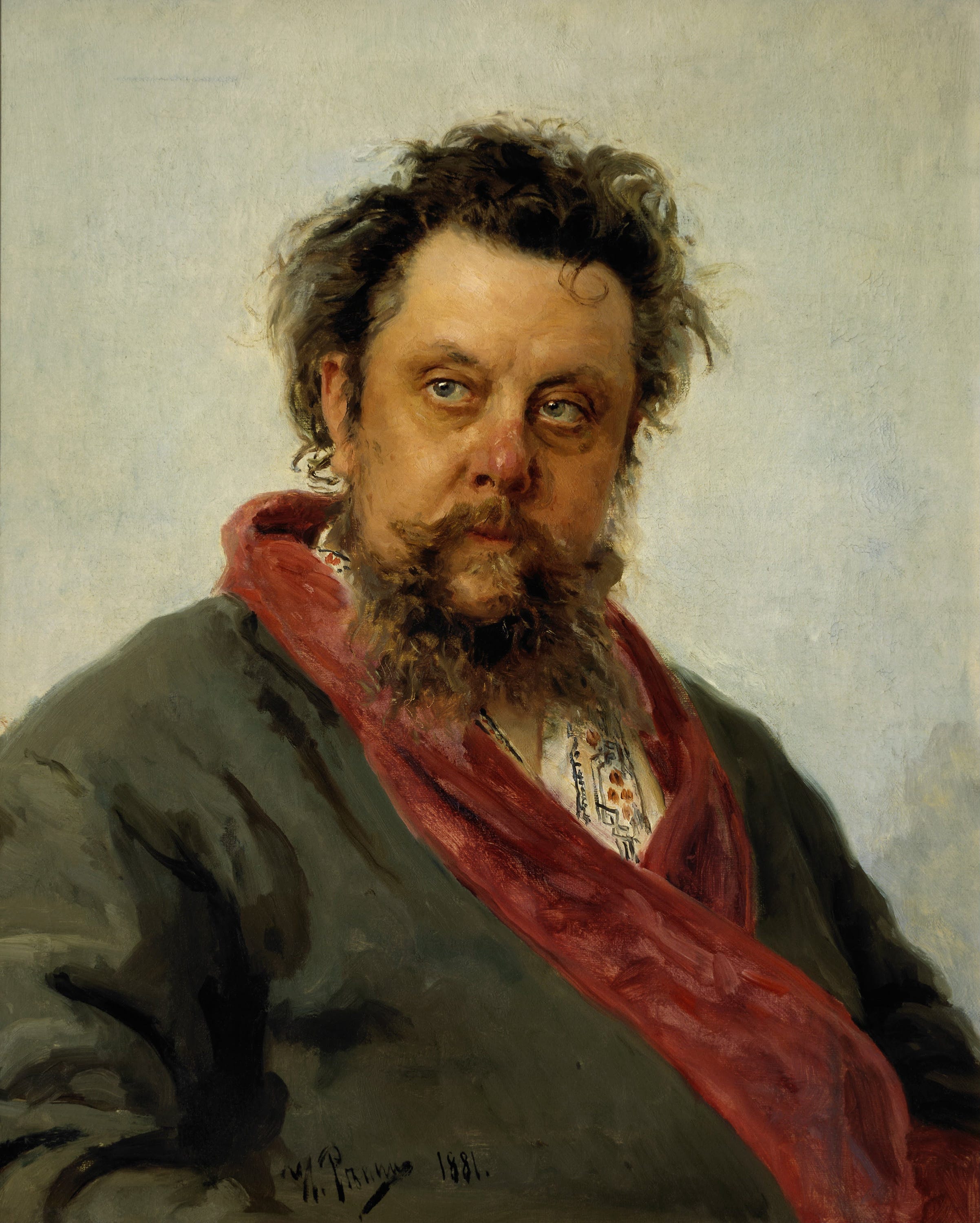
I am a man who abhors vanity. I really do. I am a worker in a vineyard that I know I do not own. Those who have read my previous writings know how critical I am of the vain whims of men, their unending folly, the peacock strutting of mankind—I have written whole essays on it, essays which I flatter myself were rather well-argued, though of course it is not for me to say, and I mention it only so you understand the gravity of what I am about to confess.
One morning, after I woke up to my usual routine—the details of which I will spare you, not because they are uninteresting, for I assure you they are fascinating, but because we have more pressing matters—I was horrified to notice the growth of a single gray hair in my beard.
Now, gray hairs on the head are one thing. The head is up there, remote, largely unseen. One does not converse with one’s own scalp. But the beard? That is my face. That is an announcement. That is what meets the world as I announce to it my thoughts, judgments, opinions, wisdom, etc.
Suddenly, nothing in the world existed but this single, insolent white hair. It caught the bathroom light with a kind of defiance. It gleamed. It became all I could see and think of. What to do with it? Should I dye it? Should I pluck it out? It is a single hair, after all—hardly a policy question, more a matter of municipal zoning, a minor administrative affair of the face.
And then, suddenly, I remembered the words of wisdom I had written just the night before. About vanity. About the folly of men. About the peacock. How dare I write such things if I am just as vain as everyone else?
Just as?! The horror. No, no, no. There must be some explanation. There must be. For you see, my dear reader, if I am having a genuine disturbance over this single gray hair, then the disturbance must be rational—for the rational is the real, and the real is the rational. If Hegel is to be trusted on anything it is surely on the question of whether my feelings about my beard are cosmically justified—and if the disturbance is rational, then it cannot be vain, for vanity is by definition irrational, a failure to see oneself clearly, and I see myself very clearly, perhaps more clearly than anyone has ever seen themselves, which is itself a kind of burden I carry quietly and without complaint.
Why should my disturbance be vain? It is simply a rational understanding of the peculiarity of a single gray hair. Consider: if there were a bunch of them, very well, that would be different. That would mean I am getting older, and that is fine. I welcome age. I have written approvingly of age. I’m a man who finds beauty even in decay—Have I told you about my Decay coffee table book idea? It is brilliant!—I look forward to age, to the seniors’ discounts, but only when it arrives properly, on time, through the front door, with all its papers in order.
But just a stray single gray hair? This is not an arrival. This is a trespasser. A biological mistake. These things happen all the time—a misfiring of the follicular cells, a clerical error in the pigment department. One does not welcome clerical errors. One corrects them. It would be far more responsible—more modest, really—to remove it. Like a man keeping weeds out of his garden. The weed is not a judgment on the garden; the weed is simply in the wrong place at the wrong time. One plucks it not out of vanity but out of order. Out of respect for the proper sequence of things.
Think about it. To keep a single gray hair, to let it stay there, gleaming, announcing itself—for what? So I can look like a sage? So I can acquire, prematurely, the dignity of gray hair, the honor of old age, the gravitas of the elder? How dishonest. How grasping. To claim a dignity and honor that are not yet mine! That is stolen valor! To wear a costume of wisdom I have not yet earned! No, no, no, not today—I will not be that man. I refuse. Keeping it, actually—now that would be the real vanity, real petty.
I should pluck it not because I fear age but because I respect age too much to impersonate it. The counterfeiter does not honor the currency. Thus I resolved, against my own vanity, indeed to pluck out this single gray hair.
I stood before the mirror. I raised the tweezers: Sorry, dear, I said to it, not without tenderness. Your time has not yet come. Once it does, I will welcome you. I will welcome all your brothers and sisters. We shall be great friends, you and I, in the fullness of time. But not yet. Not like this.
And I plucked it. And I felt, I must say, modestly justified.
4
Suppose, then, that these irritants—the pride, the constant feelings of injury, the endless struggle with the world over one’s self-image, asserting superiority through giving presents that require a PhD to appreciate—become increasingly difficult to bear. Suppose the distance self-deception maintains from them begins to collapse, and what remains is simply the suffering: the sleepless nights rehearsing conversations, the social occasions dreaded and then endured and then analyzed for days afterward, the exhausting labor of maintaining a self that feels perpetually under siege. Suppose one asks, in earnest: where does one go for help?
The modern wisdom has a clear answer. One goes to therapy. Now, let us follow the path and see where it leads for a man whose symptoms are a persistent, low-grade war with his own vanity, an exhausting sensitivity to the opinions of others, and an inability to receive either praise or ignorance without injury.
He arrives at the clinician’s office, and he describes his difficulties. He explains that he cannot attend social functions without experiencing a cascade of painful reactions: when unrecognized, he feels annihilated; when praised, he feels condescended to; when recognized partially, he feels grotesquely distorted, and he developed elaborate strategies of self-concealment to preempt the inadequate responses of others.
He mentions, perhaps, the gray hair. The way a single filament occasioned a morning of obsessive rumination, resolved only by constructing an elaborate justification that transformed plucking into a cosmic duty. He admits that this pattern recurs: the inability to simply do something, the compulsion to narrate it, to frame it, to render it philosophically respectable to an internal tribunal that is never satisfied. What might the clinician make of all of this?
There is a not-insignificant chance that the following picture emerges: Narcissistic Personality Disorder, or at a minimum, significant narcissistic features. The DSM-5 criteria include: a grandiose sense of self-importance; preoccupation with fantasies of unlimited success or brilliance; a belief that one is “special” and can only be understood by other special people; a need for excessive admiration; a sense of entitlement; interpersonally exploitative behavior; a lack of empathy; envy of others or a belief that others are envious of oneself; arrogant behaviors or attitudes.
Our man does not meet all criteria—he is not, for instance, obviously exploitative—but the pattern is recognizable. The clinician might note, too, features suggestive of vulnerable or covert narcissism—a variant in which the grandiosity is a constantly wounded one, defended, hidden beneath self-deprecation that nonetheless expects to be contradicted. The man who says, “I just write about rather uninteresting things,” and would be devastated if anyone agreed.
Perhaps other features present themselves. The obsessive quality of the rumination over the gray hair might suggest traits of Obsessive-Compulsive Personality Disorder: perfectionism, rigidity, excessive devotion to productivity, and an inability to let small matters remain small. The social avoidance might indicate Avoidant Personality Disorder: hypersensitivity to negative evaluation, feelings of inadequacy, and reluctance to engage with others unless certain of being liked.
The clinician, if thorough, might arrive at some formulation, say Narcissistic Personality Disorder with avoidant and obsessive-compulsive features. Or perhaps a “personality disorder not otherwise specified,” that capacious category for those who do not fit neatly into a single box but are clearly disordered nonetheless.
Now, personality disorders are understood to arise from some combination of genetic predisposition—a hereditary vulnerability encoded in the very structure of the nervous system—and early developmental experiences, typically attachment failures or narcissistic injuries in childhood that left the self improperly consolidated. The architecture of the psyche was laid down wrong, or at least differently, and now one must live in the building as it stands.
The neurochemistry, also, can and will be invoked. Perhaps the dopaminergic reward system responds anomalously to social feedback. Perhaps the amygdala fires too readily in response to perceived slights. Perhaps the prefrontal cortex, tasked with regulating emotional responses, is insufficiently authoritative over its limbic subordinates. The language is scientific, which is to say: mechanistic, deterministic, and utterly indifferent to meaning.
The prognosis will be delivered with care, but it will be delivered. Personality disorders are not, strictly speaking, curable. They are managed. The therapeutic goal is not transformation but compensation: learning to recognize one’s patterns, to interrupt them where possible, to develop “skills” for “distress tolerance” and “emotion regulation.” One does not become a different person; one becomes a person who can cope with being the person one is.
This will require ongoing treatment. Weekly sessions, perhaps for years. Possibly pharmacological support—not to cure the personality disorder, which is not really amenable to medication, but to address the symptoms: an anxiolytic for the social dread, an antidepressant for the low mood that inevitably accompanies the recognition that one is, in clinical terms, disordered.
And here we arrive at the cruelest gift of the will to diagnostic power: knowledge. The man who sought help because he could not attend parties without suffering now knows why he cannot attend parties without suffering. He has a permanent condition. He has, in the clinician’s carefully chosen words, a disorder of personality—which is to say, the disorder is not in what he does but in what he is.
He carries this knowledge home. He lives with it and this knowledge, far from liberating, becomes its own burden. For now, he must contend not only with the original irritants but with the meta-irritant of knowing that his irritation is pathological. He is not merely vain; he is clinically vain, diagnostically vain, vain in a way that has been identified, studied, and found to be largely intractable. Not infrequently, depression follows. How could it not? The man entered therapy, with its will to diagnostic power, hoping to be freed from his neuroses and discovered instead that his neuroses are structural and constitutional to himself. Major Depressive Disorder is added to the chart. An antidepressant is prescribed. The file thickens. The appointments continue.
I permit myself to wonder whether the diagnostic apparatus is the proper instrument for every form of human difficulty. Whether the man is best served by being told he has a disorder. Whether there might be other ways, older ways, that address these same irritants without transforming them into pathologies.
Whether, in short, there is another way.
5
No moral knowledge is worth anything if it is not mediated by humor and proportion, and these two are finally one thing: the recognition that one is not the center of the cosmos, joined to the delight rather than the despair that follows this recognition. You know what this means. You are one of us—heir to the same absurdities, subject to the same vanities, prone to the same self-deceptions that have characterized the species from its first, fatal, ambitious afternoon.
Thus, the first thing to do is to laugh at oneself—to laugh sincerely and enjoyably, to enjoy the inner spectacle of one’s own petty desires as a comedic show. To laugh at oneself is to see oneself suddenly from the outside, as others see us, as God sees us: one more member of a species that has been performing these same routines since Eden. The laughter, when it comes, accomplishes in an instant what years of therapy cannot. It is a gift, unbidden, and when it arrives it brings with it the beginnings of freedom.
The scriptures are relentlessly honest about the vanity of the men they present as chosen. David, the man after God’s own heart, numbers his army out of pride and brings a plague upon his people. Moses, who spoke with God face to face, strikes the rock in anger and is barred from the land he spent forty years pursuing. Peter boasts at the Last Supper that though all others abandon the Lord, he never will; before the cock crows, he has denied him three times, and when their eyes meet across the courtyard, Peter goes out and weeps bitterly. These men are our mirrors.
And is it not comic that God chooses precisely such people to carry his purposes? The patriarchs are liars, the kings adulterers, the prophets proud, the apostles cowards. If God wanted competent servants he would not have chosen human beings. That he did choose them, and continues to choose them, and accomplishes his ends through their endless failures, suggests he is making a point. The point, I take it, is that the accomplishment was never ours. Our competence was always illusion. The sooner we abandon the pretense of self-sufficiency, the sooner we become usable. Laughter at oneself is precisely this abandonment—this throwing up of the hands, this admission that the project of self-glorification has collapsed, thank God, because it was exhausting and we are tired.
We are lucky to have a God with such a sense of humor, who arranges matters so that our pretensions are perpetually undercut. Every Babel comes with its own confusion of tongues. The practical jokes are relentless, and they are merciful, for they keep us from the one fate worse than humiliation: success in our vanity. The Pharisee who goes to his grave believing he really was better than the tax collector has never received the gift of seeing himself clearly. He is the most unlucky one.
Nachmanides, the great medieval rabbi, wrote a letter to his son—the Iggeret HaRamban—which, in my not so humble opinion, must be studied weekly by every serious person. Its subject is humility, and its method is discipline: one wars against pride by acquiring wisdom, by remembering the truth about what one is.
Nachmanides considered this short letter, almost entirely dedicated to warning from pride, his supreme ethical testament to his son. Read it once a week, he instructs, and teach it to your children. Pride is not one vice among many for Nachmanides—it is the ur-pathology, the root from which all others grow: pride leads to injury, for the proud man expects what the world will not give him. Injury leads to anger, for the wound demands explanation or revenge. And anger unseats reason from its throne; it shatters the image of God. The man in its grip has handed the keys of the city to the besieging army. What follows is catastrophe: eating from forbidden trees, murdering brothers, the wreckage that unfolds whenever a creature forgets it is a creature.
Abraham did not forget. “I who am but dust and ashes,” he says to God while bargaining for Sodom—and notice that he could bargain, could press his case, precisely because he had no dignity to defend. Job took longer. For thirty-seven chapters, he protests, demands, and insists upon his innocence. Then the whirlwind. Then: “I had heard of you by the hearing of the ear, but now my eye sees you; therefore I despise myself and repent in dust and ashes.” He does not argue himself into humility. He is shown something.
This is what Nachmanides wants for his son. The practices he prescribes—speak gently, consider others greater, remember that your advantages are debts—are disciplines of attention designed to erode the Great Lie that stands between the creature and its peace.
“Accustom yourself to speak gently to all people at all times,” and “consider everyone as greater than yourself.” This is not a psychological technique but an instruction in reality. Before God, the distinctions we draw between ourselves and others collapse into complete irrelevance. The man we look down upon may be more beloved in heaven than we are; we do not know and cannot know. “If he is wise or wealthy, you should give him respect. If he is poor and you are richer, or if you are wiser than he, consider that you are more guilty and he is more innocent.” This logic is, admittedly, premodern and theological; much is expected from those to whom much is given. Our advantages are debts.
The goal of this discipline is what Nachmanides calls anavah—humility, the quality that Moses possessed more than any man on the face of the earth, despite his anger at the rock, despite his reluctance at the bush. This humility is not low self-esteem, which is the narcissistic wound seen from the underside. It is the accurate perception of one’s place in the order of things—dependent, derivative, sustained at every moment by a grace one did not earn. From this perception, Nachmanides promises, everything else follows. The anger dissipates because one no longer has a dignitary’s dignity to defend. The anxiety fades because one is no longer auditioning for a role one was never meant to play. The exhausting labor of self-presentation ceases because there is no longer a self that requires presentation, only a servant attending to his duties.
So here it is: a sense of humor and a sense of proportion. The laughter that sees clearly, the wisdom that knows its place. The tax collector goes home justified, not “coping well.” The Pharisee goes home damned, not with a healthy dose of self-esteem. The man upstairs laughs.
And when the injuries cut too deep for laughter, when our ego moans and refuses to give up, remember that: “We are punished justly, getting what we deserve for what we did. But this man has done nothing wrong.” The thief saw clearly at the end. We might as well start now.
6
The German philosophical tradition, our modern disaster, which still governs how most educated people think even when they have never read a word of it, performed a fateful reduction: it collapsed all asymmetrical relationships into relations of domination. The master and the slave, the colonizer and the colonized, the bourgeois and the proletarian—these became the templates through which every human bond was interpreted. Where there is inequality, there is power; where there is power, there is domination; where there is domination, there is exploitation. The logic seems irresistible, and three generations of critical theorists have made careers extending it into every crevice of human life. The teacher dominates the student. The parent dominates the child. The doctor dominates the patient. Every relationship in which one party depends upon another is recast as a scene of extraction, and the dependent party is taught to recognize their position as one of subjugation. We all became Shylocks, convinced that we have been subjected to villainy, and it is our turn now to “master the instructions.”
But dependence is not domination. The two may coincide—domination typically produces dependence in its victims—but they are not the same thing, and the failure to distinguish them has poisoned our capacity to understand the most basic features of our existence. Domination involves extraction: the master takes from the slave, the colonizer takes from the colonized, the exploiter takes from the exploited. The arrow of benefit points upward, from the dependent to the dominant. But dependence as such involves receiving: the dependent party is sustained, nourished, given what they could not provide for themselves. The arrow of benefit points downward, from the source to the dependent. A child is utterly dependent on his mother, yet he is not dominated by her; he receives from her everything he needs to live, and the relationship, however asymmetrical, is one of gift rather than extraction. We are entirely dependent on the sun, on the earth, on the air, on the billion contingencies that sustain our existence from moment to moment, and we are not thereby enslaved. Dependence is the condition of the creature; domination is the corruption of a relationship between creatures.
When we forget this distinction—when we learn to see every asymmetry as oppression—we do not escape dependencey. We cannot escape it; it is the ontological reality of finite existence. What we escape is gratitude. The child who is taught that his parents’ authority is domination will not thank them for his life. The student who is taught that education is cultural imperialism will not thank his teachers for his mind. The patient who is taught that medicine is biopolitical control will not thank the doctor who cured him. The critical vocabulary does not liberate anyone from dependence; it simply transforms the dependent into an ingrate, which is to say, into someone who receives gifts and cannot recognize them as gifts, who is sustained by others and can only resent them for it.
In the earlier section, the root cause of the irritants, of the wounds, of the deep pain, was, as a matter of fact, the obsession of autonomy, the insistence on a false in-dependence. At the party, the man tried to control the conversation by becoming a “verbal cul-de-sac.” With the gray hair, he controlled his aging by plucking the hair and his moral self-assessment by rationalizing it as an act of virtue. At the wedding, he tried to control his friend’s marriage and its meaning by imposing a heavy symbol of his own choosing. The root of this obsession is the belief that dependence is humiliation. He could not bear to be praised (received) or ignored (dependent on others’ attention) because he had unconsciously accepted that to be subject to others is to be dominated by them. But there is a deeper layer: his resentment of others was, in truth, a displaced resentment of himself—fury at his own incapacity to become the self-sufficient being he believed he ought to be. He could not bear to be praised or ignored because he had accepted that to need others is to be diminished by them. His need for validation is what really irritates him. The rage at the inadequate praiser, at the ignorant partygoer, was the rage of a man who could not forgive himself for needing them at all.
Rabbi Eliyahu Dessler, in Strive for Truth, observes that man is constitutionally both giver and taker—not giver or taker, but both, simultaneously, necessarily. We receive from others, and we give to those entrusted to our care. The human being is a link in a chain, not a terminus. And this means that the proper posture of the soul is dual: gratitude for what flows to us, generosity for what flows through us to others. The man who refuses to receive—who insists on autonomy, who sees dependence as degradation—has not only cut himself off from gratitude. He has cut himself off from generosity as well, for he has nothing to transmit. What he never received, he cannot give. The chain is broken at his link, and he stands alone, impoverished in his independence, a miser of the spirit who has hoarded nothing.
This is the world we now inhabit: a world awash in dependence and devoid of gratitude, which means a world awash in resentment. For the ingrate is never at peace. He cannot be, because he is constantly receiving what he cannot acknowledge receiving, and the unacknowledged gift festers into a grievance. He did not ask to be born, he did not ask to be taught, he did not ask to be healed—and so he is owed, he is always owed, and the debt never comes due because it is infinite and because he never names it. The resentment of the ingrate is bottomless because it is metaphysical: he resents existence itself for having placed him in a position of dependence, and since he cannot escape the position, he can only rage against it, endlessly, fruitlessly, the rage becoming the very substance of his life.
The rational critic who finds domination in every interaction, the therapist who teaches her patient to establish “boundaries” against the people who sustain him, the intellectual who cannot say “thank you” without suspecting he has surrendered something—these are the children of the German error, the believers in the triumph of the will, and that inheritance is the deepest misery.
The older wisdom begins elsewhere. It begins with the recognition that we are creatures, which means that we are dependent, which means that everything we have has been received. “What do you have that you did not receive?” Paul asks the Corinthians. The answer is: nothing. You did not give yourself your life, your mind, your capacities, your opportunities, your existence. You did not earn the air you breathe or the ground you walk on. You did not merit the people who loved you before you could love them back. From the first moment of your existence, you have been a debtor, and the debt is not a humiliation but a grace, because it means you have been given to, relentlessly, by sources you did not control and cannot repay, no matter how hard you tried.
Gratitude is the recognition of this condition, and it is the cure for much of what ails us. The man who is grateful cannot be proud in the way the proud man is proud, because he knows that his excellences are not achievements but endowments—talents entrusted, not trophies earned. The man who is grateful cannot nurse his wounds in the way the wounded man nurses his wounds, because he is too busy attending to the gifts to keep a careful ledger of the slights. The man who is grateful is not freed from vanity by effort, by discipline, by years of therapeutic work; he is freed from vanity by attention, by the simple act of noticing what he has been given, which crowds out the anxious self-monitoring that vanity requires.
This is not a coping technique but the acceptance of reality, and it must be practiced until it becomes natural, until the first response to existence is not “what do I deserve?” but “what have I received?” The Psalmist understood this: “Bless the Lord, O my soul, and forget not all his benefits.” The command is to remember, because we forget. We forget constantly, naturally, inevitably. The ego reasserts itself; the gratitude fades; the grievances return. And so we must remember again, and again, and again—not once, as if the battle could be won in a single engagement, but daily, hourly, as a discipline of attention that gradually reshapes the soul.
Gratitude is the disinfectant of the heart. It does not argue with the passions and doesn’t play them against interests; it displaces them. The proud man becomes humble not by convincing himself that he is unworthy—that way lies the false humility of the depressive, the man who has simply reversed the sign on his narcissism—but by looking away from himself altogether, toward the sources of his life, and giving thanks. In the act of thanksgiving the self is, for a moment, forgotten; and in that forgetting is the beginning of freedom.
My dear readers and subscribers—and I do not say “dear” as a mere formality, for I am a man who means what he says, often to his own disadvantage—thank you. I am grateful for your attention and generosity, and I say this having just written several thousand words on gratitude and therefore feeling some pressure to practice it, however imperfectly. I confess I have not entirely forgiven the bottom-shelf bourbon at that wedding, but I am told these things take time. If the intellect has understood the cure, the personality is still catching up. If you have read this far, we are at least struggling together—the vain laboring toward gratitude, one gray hair at a time. That, I am told, is the human condition, and perhaps the beginning of grace.
This is the finest sermon I’ve heard in years. Bravo and amen!
Brilliant. I was satisfied with how you had me laughing out loud but then you dug and analyzed and came up with a proper prescription. And I realize that your prescription is not new, it's nothing like new, but you served it up in such a way that I could hear it and that was a huge kindness.
Thank you.