

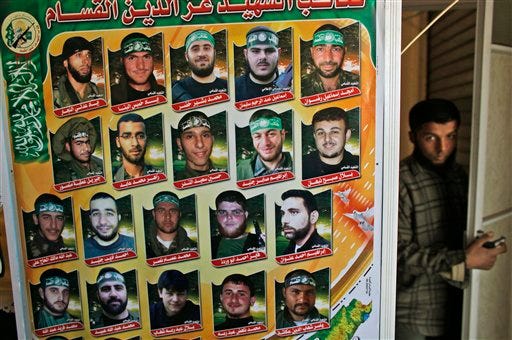
In a previous essay, which still needs a second installment, I spoke of how Palestine became the global cultural necropolis of the East and now, sadly, the West. Here are a few follow-up thoughts.
Even as it is popular, I believe that the Palestine necropolis is judged by most, even if politeness means it’s a silent judgment, to be tasteless and kitsch. This is increasingly the case in many Muslim societies that are growing in their disillusionment with “the cause.” But what makes this growing recognition prevalent, particularly among urban Arabs, is that there is nearly nothing around them that is not kitsch. Whether the baroque-ghettofabulous-sleek corporate pastiche of some Arab capitals or the historicist reconstruction of a lost Islamic architecture in others, it is all kitsch, and it is all tasteless anyways. This is also, I believe, true of all aesthetic representation from the shopping mall to the holiest site, and the expenditure of the greatest wealths and treasures on earth to create astonishing architecture in many Muslim cities has not helped much. But I must insist that this is not a permanent condition of Muslim material culture. Before the nineteenth century, almost no cultural artifact of the Muslim world was kitsch; since the nineteenth century they have produced nothing but. The aesthetic level of the problem is therefore of secondary importance, and possibly of no importance at all. Muslim kitsch, just like Christian and other kitsch, is the indicator of a vast and catastrophic loss of theological substance.
A claim of this kind, of course, meets a double resistance. The unbelieving or secular reader, for whom art possesses no theological element because nothing actually possesses a theological element, receives the phrase “theological loss” as a metaphor straining after a sociology it cannot find; that representations could sicken from a deficiency of belief strikes him as a category confusion, a delusion, a sentimental cloud.
The believing reader understands the diagnosis perfectly, and precisely for that reason cannot admit it, since he cannot admit there has been any theological loss to her or his tradition — they cannot accept that the sweetness saturating his devotional world is the sweetness of decomposition.
Both resistances refuse to make the same distinction: where the theological object retains its weight, the image points beyond itself, and its power is the power of what it points at. Where the substance is gone, the pointing collapses, and what remains is a sentimental world of images: something sweet and nice, or sad and pathetic, substituted for something that was extremely powerful, the psychic and political event substituted for the objective, ontological one. The martyr of the poster no longer stands before God; he stands before us, the mass audience, the true god of mass culture. Engagement, views, and clicks measure success. The problem was never aesthetic.