
After Prophecy
Preserving Value and Order Under Divine Concealment, a Religious Phenomenology of Modern Life and Politics


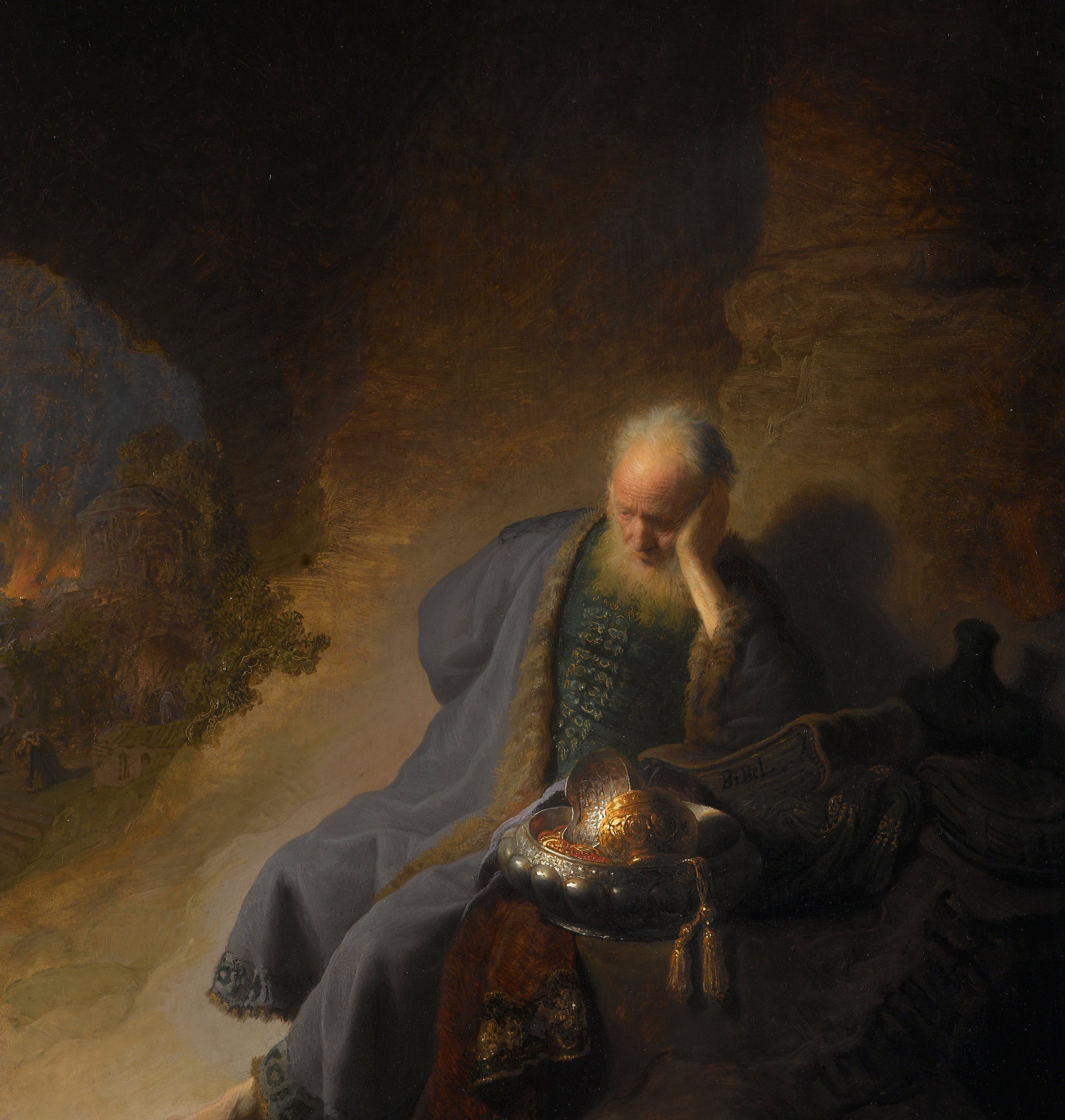
All that is solid melts into air. The line has been quoted so often that it has itself melted, dissolved into the very atmosphere it was meant to describe. Dissolution and liquefaction are perhaps the two most common sociological terms used today. Marriages dissolve at the first tremor of dissatisfaction, and those that survive are haunted by the suspicion that they persist out of cowardice rather than conviction. Children are raised by parents who cannot articulate what they are raising them for, in schools that cannot articulate what they are teaching them toward, in a world that has replaced the question “what is a good life?” with the question “what do you want?” as though mere wanting were self-justifying. Nations that fifty years ago could still invoke a shared inheritance now find the mere suggestion to be deeply embarrassing and contested: whose inheritance, defined by whom, imposed on whom, and in any case, probably a fiction constructed to serve interests that must now be named and shamed. Even the body — that last stronghold of the given, the irreducible fact that was supposed to outlast every deconstruction — has been absorbed into the general liquefaction. The flesh itself is now a text, and texts can be rewritten and edited infinitely.
American sociologist Philip Rieff was one of the secular prophets who foresaw much of this. He understood that culture is not a decorative overlay on the real business of economics and power but the deepest structure of collective life, the system of commanding truths that tells a people what is permitted and what is forbidden and why. When those truths command, order arises from them as naturally as grammar arises from a living language. Surely, much effort and the discipline of learning are still needed, but they are much more easily given to the authority of something received rather than invented. When those truths cease to command, the order they sustained becomes implausible. The prohibitions remain on the books, but no one can say why they are there. The permissions multiply because in the absence of a commanding truth, there is no ground on which to deny anything to anyone. Thus, the noise increases — the perpetual, frantic, exhausting noise of man trying to generate through sheer volume of speech, through endless kitschification, the authority and meaning that once arose from a source no one had to argue for.
What were these commanding truths, and how did they lose their command? The answer is at once obvious and strangely difficult to state, because the loss has been so thorough that the language in which one might describe what was lost has itself been degraded. But let us try. We once drew our understanding of the true, the good, and the eternal from Jewish texts as received, modified, enlarged, and elaborated by Christianity. One may admire this fact or despise it, but one cannot honestly deny it. It supplied the metaphysics that grounded the natural sciences before there were natural sciences. It supplied the moral vocabulary in which justice, mercy, dignity, and obligation were articulated and debated. It supplied the eschatology that gave suffering a meaning and history a direction. It supplied the anthropology that made every man, however wretched, the bearer of an infinite worth not conferred by society and not revocable by the state. It was, in Rieff’s terms, the commanding truth of the West, and from it descended the entire architecture of permissions and prohibitions, of sacred and profane, of the ordered and the disordered, that made Western culture a culture rather than a mere aggregation of preferences.
Western culture has undergone not merely secularization but a much deeper process: the devaluation of the Biblical sources of meaning, value, and order. This devaluation (distinct from mere loss of belief) has produced the characteristic instabilities of late modernity; dissolution of institutions, families, education, nations, and even the body, eroding every boundary and erasing every certainty. Our once commanding truths were not merely lost — that would have been survivable — but, much worse, they have been thoroughly devalued.
This essay is about how to refuse the judgment by which absence becomes unreality and human construction becomes the only remaining source of meaning and value. It is about how to restore value and meaning in a world of exile.
The Solitude of Reason
The exit from this Biblical world — gradual and never quite completed — is the central event of the modern period, and everything else that passes under the name of modernity is a consequence of it or a response to it. What matters for our purposes is not the history of the exit but its logic, which unfolds in three stages that are not strictly chronological but are nonetheless distinct.
The first stage is confidence. The Enlightenment men who left the Bible did not, for the most part, believe they were abandoning the true, the good, and the eternal. They believed they were liberating these things from the distortions of priestcraft and superstition and establishing them on firmer, more rational, more universal foundations. Reason would ground the true more securely than revelation had. Nature would ground the good more honestly than theology had. History, understood as progress, would deliver the eternal in the form of a future perfection toward which mankind was advancing. This confidence was not foolish; some of the men who held it were among the finest minds the world has produced. But it rested on the fatal assumption that the fruits of the Biblical tradition could be preserved after the roots had been severed, that concepts like truth, goodness, human dignity, and moral obligation could survive indefinitely on soil that had been salted against the only crop that had ever grown there.
The second stage is crisis. One by one, the secular substitutes revealed their insufficiency. Reason, untethered from any account of what reason is for, devoured its own foundations and ended in the critique of reason itself. Nature, interrogated without reverence, yielded facts but not values, mechanisms but not meanings, a universe of stunning regularity and total indifference. History proved the most treacherous substitute of all, because it did not merely fail to deliver the eternal but destroyed the very concept. Historicism, the great method of the nineteenth century, taught the world to see every truth as the product of its moment, every value as the expression of its age, every absolute as a local custom wearing a universal mask. What was supposed to be the science of human progress became the universal solvent of human conviction: if every idea is the child of its time, then no idea transcends its time, and the quest for the true and the eternal is revealed as one more historically conditioned illusion, no different in kind from the superstitions it replaced. The great crimes of the twentieth century were downstream of this dissolution. Once no truth could claim authority beyond its historical moment, no moral conviction could stand in the way of a political will determined to remake the world in its own image.
The third stage is devaluation, and it is here that the real and final damage is done. Loss, however painful, may preserve the value of what is lost. A man who has lost something precious knows the worth of what he no longer holds; his grief is itself a form of testimony to the reality of what is gone. Devaluation is something else. It is the conclusion that what was lost never had value in the first place. The true becomes “truth,” in skeptical quotation marks, a word that now refers not to the structure of reality but to a claim made by someone with an interest in making it. The good becomes a preference, one among many, defensible only so long as it does not inconvenience another preference. The eternal is quietly retired from serious conversation, because nothing is eternal, everything is contingent, and the man who says otherwise is either naive or dangerous. This is the transvaluation that begins with Nietzsche and completes itself in the postmodern academy, and its product is the gradual erasure of the very categories in which meaning was once articulated.
But the human animal is not built for such a void, and when the commanding truths collapse, what follows is not the quiet nihilism of men who have made their peace with meaninglessness but a frantic, inexhaustible effort to produce, through human means alone, the meaning that was once received from beyond. This is our endles kitsch, and its scope extends far beyond aesthetics. Kitsch is the attempt to generate the feeling of contact with meaning through the systematic manufacture of that feeling’s signs — more sentiment, more spectacle, more moral urgency, more therapeutic profundity, more inspirational content, more of everything that looks and sounds and moves like meaning.
The more sophisticated response is no less trapped and trapping. The modernist who makes the void his subject, the postmodernist who deconstructs every claim to meaning, the cultural critic who diagnoses the falseness of the age with exquisite cruelty — all of them are engaged in a second-order version of the same activity: the production of meaning out of the recognition that meaning is gone, the conversion of emptiness itself into content, the husk generating a literature about its own huskness that is itself more husk. Commentary upon commentary, each layer thinner than the last, each claiming to see through the layer beneath it, none of them able to touch the ground; ever more refined acts of description merely intensifies the problem.
This is the loop from which no method internal to the post-Christian world has managed to escape. The kitsch producers and the kitsch diagnosticians, the sentimentalists and the ironists, the dreamers and the debunkers, all of them are working the same depleted mine, extracting ever smaller and smaller quantities of ore from a vein that was exhausted long ago, and the noise of their machinery is the characteristic sound of our moment: loud, constant, confident, ugly, and empty.
But the loop, however fascinating as a remarkable spectacle of intellectual and cultural self-consumption, is not the deepest problem. The deepest problem is what the loop does to the material world and not just culture. The instability of the social and political order is not a separate phenomenon from the collapse of meaning but its direct consequence. Order depends on meaning the way a body depends on a skeleton: remove the skeleton and the body does not become free but formless, and formlessness is death. Strip the meaning away, and the order becomes implausible, and implausible institutions do not command allegiance; they provoke contempt, and the contempt accelerates the dissolution, and the dissolution confirms the contempt, and the spiral has no bottom.
To understand why this spiral is so difficult to reverse, one must examine what kind of loss is at work. There is, first, the loss of meaning itself — the loss of the lived experience of truth and goodness as realities organizing individual and collective life. This is what happened when Biblical meaning ceased to command, when the secular substitutes proved insufficient, when the knowledge of God recorded in Torah was no longer available as a living contact with the real.
This loss is enormous and its consequences are severe, but it is, in principle, survivable, because the loss of an experience does not entail the loss of the judgment that the experience was real. A man who has gone blind knows what sight was. His blindness is a deprivation, not a refutation of sight; it does not lead him to conclude that color was a hallucination or that the visible world was a collective fiction. He has lost the capacity, not the knowledge, and the knowledge that there is something real that he can no longer perceive continues to orient him even in the dark. He walks by faith rather than by sight, and the faith is not a lesser form of knowledge but the only form of orientation adequate to his condition.
What is not survivable is the second kind of loss, which is not the deepening of the first but its transmutation into the judgment that what was lost never had value to begin with — that the pearls we cast before the swine were always glass, that truth was always a mask for power, that goodness was always a disguise for interest, that the eternal was a fairy tale told by priests to keep the credulous in line. This is devaluation, and it strikes not at the experience alone but at the standard by which the experience could be recognized as real and its absence recognized as loss. The blind man who concludes that sight was always an illusion has not merely lost his sight; he has lost the memory and the very idea of sight, and with it the capacity to know what he is missing, and with that the capacity to orient himself toward its recovery. Emptiness is not a deficiency in his world but the truth of his world. Huskness, it turns out, has always been the real kernel of the husk.
And the tragedy does not stop at the primary loss. Once the highest value has been devalued, every subordinate value that derived its authority from it is left without ground. The hierarchy of values that once organized an entire way of life unravels from the top down, because every lower rung depended on the higher for its legitimacy, and when the highest is removed, the rest do not stand on their own but fall in sequence. If the eternal is a fiction, then the sacred is a fiction, and if the sacred is a fiction, then the distinction between the sacred and the profane is a fiction, and every boundary that was drawn on the basis of that distinction, between the permitted and the forbidden, the noble and the base, the beautiful and the ugly, the good and the evil, the ordered and the disordered, loses its force.
If the good is a preference, then moral hierarchy is an imposition, and if moral hierarchy is an imposition, then every claim that one way of living is better than another is an act of power rather than an act of discernment, and the authority of every institution that rested on such claims — the family, the school, the court, the church — is retroactively delegitimized. The dissolution and the liquefaction are not a collection of separate crises with separate causes. They are a single unraveling, proceeding with remorseless logical consistency from the devaluation of the highest to the dissolution of everything that once hung from it. The man who denied the eternal did not know, perhaps, that he was also dissolving the family; but the family was suspended from the eternal by a chain of intermediate values, and when the topmost link was cut, the whole chain fell, and it is still falling, and it will continue to fall until it reaches the ground, which is to say, until there is nothing left to dissolve.
This is what postmodern atheism really is — not the early modern variety, which was, from Voltaire through Marx, a quarrel with the church conducted, for the most part, in the vocabulary of the church, a rebellion against ecclesiastical authority and superstition that still breathed the air of the tradition it rejected and retained, often without knowing it, the essential structure of Biblical conviction in secularized form.
The early modern atheist denied God while affirming truth, denied revelation while affirming reason, denied the church while affirming the dignity of man, and every one of these affirmations was a shadow of the God he thought he had buried, still exerting gravitational force from beneath the soil. This residual gravity is not a minor observation. The devaluation aims to be total, but the man who recognizes the dissolution as a wound rather than a correction has not completed it. Something in him continues to assign value to what his categories have declared valueless — meaning sensed but unrealized, absent from his intellectual framework but present in the pain that framework cannot explain.
It is to this residue, and not to any prior commitment of faith, that the discipline of sacrifice we will describe is addressed. Real atheism, the atheism that arrives with Nietzsche and achieves cultural dominance in the twenty-first century, denies not God alone but the entire order of reality that the word God was once used to name. Nothing is true, nothing is real, nothing is eternal, nothing is given, everything is constructed, and construction is power, and power is all there is. This is the comprehensive devaluation carried to its conclusion; the cutting of the topmost link performed with full awareness that the chain will fall, and its consequences are not only intellectual but civilizational. Once you have denied the reality of the true and the good and the eternal, you have not merely made a claim about metaphysics; you have destroyed the only soil in which order can grow.
The problem of value, the question of how value can be reestablished after its comprehensive devaluation, has been the central agony of post-Enlightenment thought. Max Weber spent his career tracing the consequences of a disenchantment he could diagnose but not reverse, and Ernst Troeltsch, perhaps more honestly than anyone in his generation, confronted the impossibility of grounding the absolute in the historical and found no way through. Friedrich Nietzsche understood the stakes more clearly than either of them, which is why his work carries its characteristic atmosphere of exhilaration and dread that no subsequent thinker has been able to replicate. Nietzsche saw that the death of God did not liberate value but annihilated the conditions under which value, in any serious sense, had ever been possible, and his attempt to re-found it through the sheer force of the will was the last desperate wager.
Their question remains ours: how can value be established after the comprehensive devaluation of everything that once gave value its ground? And the honest answer is that it cannot — not through reason, which can analyze value but not create it, not through politics, which can enforce compliance but not command allegiance, not through art, which can evoke the feeling of value but not supply its substance, not through the will, which can assert value but not ground it. If meaning is to be restored, and without the restoration of meaning, the restoration of order is simply impossible, then the restoration cannot be accomplished by any of the methods that the post-Christian world has at its disposal, because every one of those methods operates within the devalued framework and is therefore subject to the very devaluation it is trying to reverse.
The remedies appropriate to the two kinds of loss are entirely different. The first kind of loss — the loss of experience while the judgment of reality is preserved, calls for patience, for discipline, for the maintenance of forms that keep the memory of the experience alive even when the experience itself is unavailable. A man who has lost his sight but knows that sight is real can learn to navigate by other means; he can organize his life around the absence in a way that honors what is absent and keeps open the possibility of its return. This is, in essence, the discipline that the tradition of Torah prescribes, and we will return to it. But the second kind of loss, that of devaluation, calls for something prior to any discipline and without which discipline itself becomes impossible: the restoration of the judgment that what was lost was, indeed, real. Before the blind man can learn to navigate in the dark, he must first be disabused of the conclusion that sight was always a fiction but real, real in its absence, real in the sense that its absence is a wound and not a correction, a deprivation and not an enlightenment.
Honesty is the one thing that must govern what follows, because there is always the temptation to pretend that we possess what we do not possess, to perform the confidence of faith without its substance, to cover the void with the vocabulary of religion. This temptation must be rejected because it is the mirror image of devaluation and it is no less destructive
There exists, within the religious traditions of the West and particularly within the world of the Bible, a received account of a historical condition in which human beings lived in sustained contact with God, a contact so intimate and so direct that the Bible describes it as knowledge of God in the strongest sense of the word, the kind of knowledge a man has of his closest friend, knowledge born of encounter so real that the one who possesses it can speak on behalf of the one he knows and be understood. For biblical Israel, the prophetic knowledge is the foundation of everything else, of law, of worship, of communal order, of the relationship between God and man that gives all other relationships their meaning and their shape.
Those of us who believe in the Bible hold it to be true. We hold that the Bible itself — its depth, its coherence, its capacity to illuminate what no other word of man illuminates, its sheer weight as an achievement that no merely human effort could have produced — is its own best evidence. We hold that prophetic knowledge was real, it must have been real, that men and women once lived in the kind of contact with the divine that the texts describe, and that the texts are not literary constructions imposed on experience but faithful records of an experience that was as real as anything we know.
But we also must recognize the tradition of Israel itself records this knowledge but records equally its withdrawal. The prophets speak, and then they fall silent, and the silence has lasted a very long time indeed. Whatever it was that the prophets knew, it is not available to us in the form in which it was available to them. We do not hear what they heard. We do not know what they knew. We stand at a very great distance from the condition they describe, and the distance is not merely historical but experiential: the knowledge they possessed is not something we can recover by reading their words more carefully or performing their rituals more punctiliously, because it was never a product of reading or ritual but of a gift that was given and then withdrawn, for reasons the Bible does not fully explain.
On this point, and on this point alone, we agree with the atheist. He looks at the world and sees no evidence of the kind of knowledge the Prophets describe. So do we. He concludes that it was never real. We do not draw that conclusion, but we do not dispute his observation. The prophetic knowledge is not present in the world today and hasn’t been for a long time. The contact is not available. The communion has been interrupted. Where we differ from the atheist is not in our assessment of the present condition but in the judgment we draw from it: he concludes that what is absent was always absent, that the Bible is a monument to human credulity; we conclude that what is absent was once present and that its absence is itself a fact of enormous consequence, demanding not devaluation but understanding.
And there is a third position, no less damaging than the devaluation it opposes, which refuses to acknowledge the absence at all. Religious fetishism treats the Bible not as the record of a living contact with God that has been withdrawn but as a self-sufficient inheritance requiring nothing beyond its own perpetuation; texts studied without the expectation that they will open onto the reality they describe, rituals performed without the awareness that they were designed as vessels for a presence that is no longer felt, commandments observed as ancestral customs rather than as responses to a commanding voice. This is not faith but its most plausible counterfeit. The fetishist does not worship God; he worships the artifacts that once mediated the worship of God. The atheist, who at least has the honesty to report what he sees when he looks at the world, might be closer to the truth about the present condition than the fetishist who does not know he is blind because he has redefined sight to match his blindness.
Honesty requires us to hold three things at once: that the Bible records reality, that what it records is not available to us in the form in which it was once available, and that the absence must be neither denied nor devalued. Atheism denies the reality. Fetishism denies the absence. The post-Christian culture in which both of them operate has denied the value altogether. Against all three denials, the position we want to defend in what follows is that the value of what we do not have can be preserved without pretending that we have it — and that this preservation, far from being a merely private consolation, is the only honest ground from which an order adequate to our condition might be drawn. Not a restoration of prophetic knowledge, which is not ours to power, but something more modest and more durable: an order that draws its authority from a meaning that is absent but not devalued, remembered but not falsified, honored in the form of its absence rather than simulated in a performance of its presence.
The Psalmist asked, long before the question became ours:
“If the foundations are overthrown, what can the righteous do?”
— Psalm 11:3
What indeed can he do — the man who has not consented to the overthrow and who refuses to see the rubble of the destroyed foundations liberation, who insists that what was devalued was real and that its absence is a wound? Where does he stand, and on what, when the ground itself has been declared a fiction?
A Flying Prescription from Exile
The righteous man of the Psalm has at his disposal a body of instruction that well stood the test of the vicissitude of time. It lies in a tradition the Enlightenment declared obsolete and that the devaluation has since declared fraudulent, a tradition whose very dismissal is, for many secular readers, one of the foundational certainties of his education. To ask him to look there is to ask him to suspend, at least provisionally, the operation that his entire formation has prepared him to perform: the preemptive devaluation of any claim issuing from a religious source. We ask it nonetheless, because what that tradition contains, on the specific question of how to live after the collapse of commanding truths, might not be what he expects to find.
The texts and traditions through which this essay will now move belong to Israel, but the condition they address is widely shared. Christianity received Israel’s scriptures as the ground of its own revelation, built its understanding of exile and prayer and sacrifice and providence upon categories that were already ancient when the Church adopted them, and carried those categories into the world whose dissolution we are witnessing — so that the rabbinic account of life after the withdrawal of prophecy, however remote it may appear from the concerns of a secular or post-Christian reader, is in fact an account of the foundations on which his own world was built. What the rabbis articulated in the centuries after the destruction of the Second Temple, when prophecy had ceased and the worshipper stood before God without the assurance that his words were received, is the oldest account available to the Western mind of how meaning may be preserved when divine presence is hidden and political life has passed into the hands of powers whose peace is not the peace of God. Biblical peace, God’s peace, denotes not merely the absence of conflict but the condition of completion, wholeness that obtains when the world is rightly ordered in relation to its source — a condition so fundamental that the Bible identifies peace as one of the names of God Himself.
The Mishnah, the earliest stratum of rabbinic legal and ethical teaching, compiled in the second century, preserves a statement attributed to Rabbi Hanina, the deputy high priest, that will serve as our point of departure:
Pray for the peace of the kingdom, for were it not for the fear of it, each man would swallow his fellow alive.
— Mishnah, Avot 3:2
Three features of this sentence should arrest the attention. The first is the brutality of its anthropology. This is not a text that begins from the premise of innate human goodness easily cultivated but corrupted by institutions or alienated by history; it begins from the premise that the default condition of human beings, absent the coercive restraint and force of political order, is mutual devouring. The peace it recommends is not the peace of harmony or reconciliation or the brotherhood of man, but the peace of a kingdom — of organized, enforced, imperfect authority whose primary achievement is the negative one of preventing the worst. Anyone who has watched the speed with which civil order collapses into predation whenever the enforcing power is withdrawn — whether in war or in natural disaster and not unlike events unfolding after the Arab Spring — will recognize the wisdom of the observation. The text is by no means cynical. It is realist in a way that many modern minds, trained to regard realism about human nature as a relic of theological pessimism, have largely forgotten how to be.
The second feature is the prescription: prayer. And prayer directed not to God’s own peace, not to the redemption of the world, not to the coming of the kingdom of God, but to the peace of the kingdom, the political order as it actually exists, unredeemed and fallen and better than the alternative. The Jewish text prescribes prayer because it understands something about the nature of political order that no purely secular account has been able to explain: that order cannot be maintained by force alone, that the force which prevents mutual devouring is itself sustained by something the political order does not generate and cannot replace, and that the name for the act by which a human being reaches toward that sustaining source, however hidden it may be, is prayer.
The third feature, and the most difficult to understand, is the relation the sentence establishes between prayer and the kingdom. Prayer, which is directed to God, is made for the city. The one who prays does not worship the kingdom, does not sacralize it, does not confuse its peace with the peace of God. But neither does he despise it, withdraw from it, or refuse engagement with it in the name of a higher allegiance. He inhabits the kingdom fully, seeks its welfare sincerely, and prays for it — but he prays to God, and the distinction between the object of his prayer and the addressee of his prayer is the narrow space to which we turn.
The Prophetic Prescription for the Post-Prophetic Condition
It was to a generation in this condition of exile that the prophet Jeremiah addressed some of the most remarkable instructions in all of scripture. The year was 597 BCE, the first deportation to Babylon had been accomplished, and the Hebrew exiles were besieged on every side by false prophets and dreamers, activists and radical thinkers, assuring them that the captivity would be brief, that God’s deliverance was near, that the restoration was at hand. Against all of this, Jeremiah sent a letter, speaking in God’s name:
Thus says the LORD of hosts, the God of Israel, to all the exiles whom I have sent into exile from Jerusalem to Babylon: Build houses and dwell in them; plant gardens and eat their fruit. Take wives and beget sons and daughters; take wives for your sons, and give your daughters to husbands, so that they may bear sons and daughters; multiply there, and do not diminish. Seek the peace of the city where I have sent you into exile, and pray to the LORD on its behalf, for in its peace you shall have peace. For thus says the LORD of hosts, the God of Israel: Do not let your prophets who are among you and your diviners deceive you, and do not listen to the dreams that they dream, for they prophesy falsely to you in my name; I did not send them, declares the LORD.
— Jeremiah 29:4–9
The exiles have lost everything. The false prophets offer them precisely what the human heart demands in such circumstances: an opium, a myth of imminent redemption, a narrative in which their suffering is the prelude to triumph. And God, through Jeremiah, tells them to ignore all of it because in the meantime their task is not mythic but domestic, not spectacular but ordinary, not heroic but patient. Build. Plant. Marry. Multiply. Pray for the foreign city in which you find yourselves. And above all: do not listen to dreamers.
The warning against the dreamers is as important as the practical instructions themselves, and it bears directly on their and our condition. The false prophets Jeremiah addresses are not charlatans in the obvious sense — they are not men who know they are lying and lie for profit or power, though such men exist in every generation as they do exist today. They are men who genuinely feel something, who genuinely believe themselves to be in possession of redemption, who stand before the people with real tears and real conviction and announce that deliverance is at hand. They could be sincere, and thus dangerous, because a liar can be exposed, but a sincere man speaking from his own heart in the belief that he speaks from the mouth of God is almost impossible to refute. He has all the marks of authenticity, to use our bedeviled modern term, all the emotional signatures of the real thing, and the only thing he lacks is the one thing that cannot be directly verified from the outside: authorization. He was not sent. The word he speaks is his own. And yet the absence of authorization, though it cannot be seen, can be experienced in the sedative effects. The word of God awakens; the soothsayer’s puts one to sleep. Jeremiah described the operation lucidly: They have treated the wound of my people carelessly, saying ‘Peace, peace’ — but there is no peace (Jeremiah 6:14). The false word does not heal the wound; it drugs it. It is the opium of the people — not religion, as Marx thought, but its counterfeit.
Elsewhere in his oracles against the false prophets, Jeremiah draws the distinction:
The prophet who has a dream, let him tell a dream; but he who has my word, let him speak my word faithfully. What is straw to the grain? declares the LORD. Is not my word like fire, declares the LORD, and like a hammer that breaks the rock in pieces?
— Jeremiah 23:28–29
The real word of God, when it comes, is not an opium. It does not always comfort, does not flatter, and does not tell the listener what he already wanted to hear. It burns. It shatters. It breaks open what was closed. The false word does none of these things; it soothes, it reassures, it confirms, it wraps the listener in the warm feeling of having been addressed by the divine without any of the disturbance that actual contact with the divine invariably produces. The false prophet can be recognized not by the poverty of his performance but by its smoothness, by the very fact that it goes down easily, that it produces the feeling of meaning without the death that real meaning demands.
This is as exact a description of our modern kitsch and its producers, its thinkers and intellectuals, as anything written in the twenty-first century. The therapeutic guru who offers transcendence as a lifestyle product, the political leader who performs prophetic denunciation without prophetic authority, the activist who wields the language of justice and compassion as instruments of tyranny, the artist who manufactures the sensation of depth through the systematic arrangement of surfaces, all of them are speaking from their own hearts in the genuine belief, or at least the genuine performance of the belief, that they are speaking something true.
The moral dignity of the ordinary
The post-Christian world is not a world that has lost its prophets and suffers in honest silence. It is a world so overwhelmed by its false prophets that it can’t even experience the silence — by men and women and increasingly by machines speaking with enormous confidence and enormous fluency about the true and the good and the just and the compassionate and the transformative, all of it generated from within rather than received from beyond, all of it straw, all of it self-commentary, all of it smooth where the real word would shatter. Never before in human history has so much energy, so much talent, so much institutional power been devoted to the production and consumption of mythic narratives that promise transformation, liberation, justice, healing, and every other form of redemptive consummation, all of it available now, all of it demanding total commitment, all of it generating the intense feeling of participating in something of ultimate significance. Never before was so much said and so little meant.
Moreover, the post-Christian world has managed to produce something very close to the perfect inverse of Jeremiah’s instructions by its very inner logic. Jeremiah told the exiles to build, to plant, to marry, to multiply, and to seek the peace of the city. The secular world has made every one of these acts not merely difficult but faintly suspect. False prophecy, by its nature, directs the soul toward the mythic and away from the domestic. It promises transformation, redemption, a climactic resolution to the suffering of the present — and in doing so it empties the ordinary of its weight and dignity, because the ordinary, measured against the drama of imminent redemption, can only ever appear as a distraction from the real business of salvation. Why build a house when the world is about to be transfigured whether by climate change or the AI revolution? Why plant a garden when justice demands your attention? Why marry, why multiply, why commit yourself to the long, unspectacular labor of sustaining life across generations, when the dreams on offer are so much grander, so much more vivid, so much more flattering to the dreamer’s sense of his own significance?
Therefore, false prophecy does not merely tell untruths; it destroys the temporal conditions of responsible life. It abolishes waiting, continuity, transmission, and incremental labor by making every ordinary obligation look insignificant beside imminent transformation. Why get married and have children when you can vote for radical transformation of society?
The displacement of meaning from the ordinary to the mythic follows necessarily from the dominance of false prophetic speech, because false prophecy can only produce meaning in the gestures of the spectacular. It cannot sanctify the ordinary, because the sanctification of the ordinary requires a source of meaning that exceeds the ordinary without annihilating it, a source that makes the building of a house an act of obedience rather than merely an act of construction, that makes the raising of children an act of transmission rather than merely an act of reproduction. Only genuine contact with meaning, and where that contact has been withdrawn, the ordinary is left naked, stripped of its significance, unable to compete with the gaudy intensities of the mythic, and gradually abandoned by a culture that can no longer remember why anyone would waste a life on something so unremarkable as building and planting and raising children. The much feared decline in birth rates across every post-Christian society is not an economic problem amenable to economic solutions. It is the demographic signature of a world that has lost the capacity to find meaning in the ordinary and can no longer transmit what it no longer values.
Jeremiah’s instructions assume the opposite: that the ordinary is not a consolation for those denied the mythic but the actual substance of faithfulness in exile, the work that sustains the world while the false prophets chase their dreams. The house built in Babylon is not a concession to captivity. It is an act of faith that the meaning of building has not been annihilated by the destruction of the temple, that the value of what was lost survives in the patient labor of those who refuse to let the loss become a devaluation. To build in exile from meaning, to plant in exile, to marry and multiply in exile, is to insist, against every pressure of the moment, that the ordinary retains its dignity even when the ground of that dignity is hidden is to know that the hiddenness is not permanent.
The return of value
But Jeremiah’s letter does not end with the domestic instructions. It continues:
For thus says the LORD: When seventy years are completed for Babylon, I will visit you and fulfill my good word to you, to bring you back to this place. For I know the thoughts that I think toward you, declares the LORD, thoughts of peace and not of evil, to give you a future and a hope.
— Jeremiah 29:10–11
Jeremiah’s disclosure that God knows the thoughts He thinks toward the exiles — machshavos, not devarim; hidden thoughts, not public speech — thoughts of peace and not of evil, draws on a vocabulary the Psalms had already established. The same Psalm that declares “the counsel of the LORD stands forever, the thoughts of His heart to all generations” opens by grounding the world in davar: “By the word of the LORD the heavens were made” (Psalm 33:6). Davar is the mode of creation and command — public, audible, returnable by the prophet who hears it. Machshavah is the mode of hidden governance — patient, silent, enduring across generations, operating behind the political order of the nations whose own counsel it frustrates. When Jeremiah uses machshavos rather than devarim, thoughts rather than word, to describe God’s orientation toward the exiles, the shift marks a change in mode: God is no longer sending a word the exiles can hear and return. He is holding an intention directed toward peace that governs without disclosing itself.
It is the distinction between a God who speaks and a God who thinks: between a divine presence that discloses itself to the world through a word that can be heard, received, and returned, and a divine presence that governs the world through an intention held in silence, present but unspoken, working but hidden.
The darkness, the complete absence of prophetic vision, is not the absence of governance but the condition under which governance, in this age, operates. The difference is not one of degree but of kind, and the condition determines the entire character of the age in which one finds oneself — not only the possibilities of knowledge and the conditions of faith, but the very nature of prayer.
And the letter itself enacts what it announces. Jeremiah’s letter is a prophetic davar — a word spoken with full authority in the old mode of divine speech – and a farewell to davar. The content of that davar is the declaration that the age of prophetic words is yielding to the age of divine thought. The prophet employs his word one final time to announce that the word is being withdrawn and the thought is beginning. After this letter, no further prophetic letters reached the exiles — only the machshavos of a God who governs in silence. The letter is both a davar and a farewell to davar: the last prophetic utterance, whose content is the cessation of prophetic utterance, and whose very existence as a spoken word testifies that what replaces speech is not absence but a divine governance too deep for speech to carry.
The question of prayer, at its root, is a problem of speech. It is the question of whether human speech can reach beyond itself — whether words spoken by a finite creature in a finite room can make contact with whatever it is that exceeds the room, or whether they merely echo off the walls and return to the speaker carrying nothing but the sound of his own voice. The Bible, in the accounts it gives of its own origins, records a time when this question did not arise, because the contact was realized and the communication was complete. The prophets did not speculate but knew that they were in the presence of the one they addressed — and more than this, that the words they spoke were not, in the deepest sense, their own. They were returning to God what God had first given to them: His own word, His own peace (shalom), received in the intimacy of prophetic knowledge and offered back in the act of prayer. The circuit, if one may use so mechanical a term for something the Bible describes as the most intimate of all encounters, was complete. God spoke. The prophet heard. The prophet spoke. God heard. And through this exchange, the divine peace entered the world, carried on the breath of a man who knew whom he was addressing and what he was authorized to say.
This is what prayer was. And Torah, maximally defined in a rabbinical sense that includes nearly all classical Jewish texts, is equally clear that this is not what prayer is now. The prophets fell silent as though a door had been closed from the other side. God withdrew His word from the world, and with it He withdrew the conditions under which the kind of knowledge the prophets possessed was possible. The intimate communion that had made prayer an exchange between God and man was interrupted, suspended, and placed beyond reach for reasons Torah honors by not fully explaining. And in the wake of this withdrawal, the fundamental problem of prayer presented itself with a problem it had never possessed before: how does one speak to a God who is no longer speaking? What happens to the word when the Word has been withheld? What does prayer become when the one who prays can no longer be certain — can no longer know, in the prophetic sense of knowing — that his words reach anyone at all?
How shall Israel speak when the prophetic word has fallen silent? We do not hear what the prophets heard, and no fidelity worthy of the name may pretend that we do. The Word has gone silent. It remains silent.
The withdrawal is not, however, the end of the story — or rather, it would not be, were the withdrawal the only thing that had happened. We, as mentioned in the first half of this essay, went on to completely devalue the Word. This devaluation naturally short-circuits the very mechanism by which the loss could be recognized, mourned, and thereby preserved as a live question rather than a settled answer. The modern man does not merely lack the prophetic experience of prayer; the devaluation has taught him to dismiss the experience before he encounters it, to regard the desire for it as a symptom of credulity rather than a signal of deprivation, to devalue the thing before he has valued it. The modern loop we described earlier, the production of meaning out of the recognition that meaning is gone, commentary on commentary, each layer thinner than the last, operates here with great ferocity, because prayer is the point at which the loop is most completely sealed: the man who suspects that his words reach no one will not exert himself to speak, and the man who does not exert himself to speak will never discover whether his suspicion was warranted, and his undiscovered ignorance will harden into certainty, and the certainty will present itself as sophistication, and the sophistication will be indistinguishable from despair.
And yet the short circuit is not total, or this essay would have no readers. The man who recognizes himself in the previous description has already, in that recognition, conceded that something is missing in the way a dimension is missing from a flattened world, missing in a way that reorganizes everything once it is acknowledged. The lack the reader feels, if he feels it, is not a deficiency in him but a fact about the world and Torah has a name for it and a set of instructions for what to do with it — instructions that will sound, at first, like more alienation.
The easy answer, and the false one, is that prayer becomes unnecessary, a relic of a more credulous age, to be preserved as cultural heritage or discarded as superstition, depending on one’s temperament. This is the answer of the devaluation, and we have already seen where it leads, to meaninglessness and the breakdown of order.
The harder answer is that prayer continues but that it changes its nature so profoundly that the change amounts to a kind of inversion. Where the prophet’s prayer was an act of communication, an exchange of speech between persons who knew each other, prayer after the withdrawal of prophecy becomes, according to Talmud, a sacrifice (korban) — an offering made to one who does not answer, by one who does not know whether his offering has been received, sustained by nothing but the discipline of continuing to offer.
By sacrifice, here we do not mean the grim endurance of an absence or an alienation. It is not the stoic acceptance of silence, the stiff upper lip of the devout man who keeps going through the motions because he has nothing better to do. Sacrifice begins with the positive, with the richest and fattest of the flock, with the thing most valued and most alive. One fattens the bull before one slaughters it, and the fattening is not a mere enhancement to the offering but constitutive of it. A thin and sickly animal dragged to the altar is no sacrifice at all, because sacrifice consists precisely in the giving away of what is really possessed, really cultivated, really valued, the relinquishing before God of the most valuable thing one has precisely because its value is so real that only God is worthy of receiving it.
Take with you words, and turn to the LORD: say unto him, “Take away all iniquity, and receive us graciously: so will we render the bulls of our lips.”— Hosea 14:2
Prayer after the end of prophecy is such a sacrifice. The worshipper who prays in the absence of prophecy does not pray as a man resigned to silence. He prays as the prophets prayed — cultivating, through the full exertion of his intellect and imagination, a genuine apprehension of what it would mean to know God (da’as Hashem). He enters the prayer as one enters a world: the world of God in its fullness, where the true and the good and the eternal are not abstractions but presence, where the order described by the prophets is real and immediate, where the knowledge of God is not a concept but an encounter. This cultivation can not be pretense. It is the most serious intellectual and spiritual labor available to a human being, the fattening of the bull, the building up of the very thing that will be offered. And the offering occurs at the threshold: the moment the prayer ends and the worshipper steps back into the post-Christian desert where none of what he has cultivated is there, where the communion does not extend, where the peace does not descend.
The walking away back into the desert and not the silence that follows is the sacrifice. The silence is merely the condition. The sacrifice is the giving away of the apprehension itself, the relinquishing of the knowledge one has built, at the point where it meets the world’s inability to receive it. The unanswered prayer is the sacrifice. And this act, this giving away of the most valuable thing one possesses to a God who does not return it, accomplishes the one thing that neither possession nor devaluation can accomplish. It preserves the value of what is absent without converting the absence into either false presence or confirmed emptiness. The worshipper who has genuinely built and genuinely surrendered stands in a relation to the God who is available nowhere else: not the relation of possession, which belongs to the prophet and is no longer given; not the relation of denial, which belongs to the atheist and produces the devaluation; but the relation of proximity through offering — as close to the mystery as a finite being can come, precisely because he has given away his closest approach rather than clutching it.
This sacrificial prayer affirms the value of what one lost for one gives to God the most valuable thing one has.
The entire argument, of course, assumes a God to whom the offering is made and by whom the value of the offering is secured, and the reader who has not already concluded that such a God exists will find in the argument no proof that He does — because the argument offers no such proof, and cannot, because proof of the kind the modern mind demands stands within the very epistemology the argument is trying to escape. Reason can analyze value but cannot create it; reason can evaluate evidence for God’s existence but cannot supply the conditions under which such evidence would be recognizable as evidence. There is, without a doubt, a circularity. But it is not the circularity of a logical fallacy; it is the circularity of every practice that produces, in the doing, the conditions of its own intelligibility.
A man does not first comprehend music theoretically and then learn to hear it; he hears, and the hearing opens the comprehension, and the comprehension deepens the hearing, and at no point in the process is there a moment of pure foundation on which the rest is built. He begins in the middle, as we all begin in the middle, and the beginning is an act — not a conclusion, not a proof, not a preliminary securing of the ground, but an act undertaken without the guarantee that it will succeed and validated, if it is validated, only from within. The tradition calls this act prayer, and the sacrifice it prescribes is the specific form the act takes in a time when the ground has been withdrawn: the cultivation, through all the resources available to him, of an apprehension whose truth and authority those resources cannot supply, followed by the giving back of that apprehension to the source from which it came — and it is the giving back that completes the act, because the giving back forms the worshipper into one who receives rather than produces, placing the apprehension under the category of gift rather than construction, within a relation to a source that concealment prevents him from possessing as knowledge but that the discipline of offering refuses to deny. It is this refusal, enacted in the body of the prayer rather than secured by any argument, that preserves value against the devaluation by sustaining the posture of reception the devaluation would seal shut.
The post-Christian condition is not merely the problem to which Torah offers a remedy. It is the material of the remedy; it supplies the historical material upon which the discipline of sacrificial prayer must act. The comprehensive devaluation of meaning is not a catastrophe that happened to the modern world from outside but it is the form in which our sacrificial prayer becomes necessary: the withdrawal of prophetic knowledge, the silencing of the divine word, the handing over of the world to the governance of nations whose peace is not God’s peace. The Bible does not call this withdrawal a tragedy alone. It calls it an exile, and exile, however painful, is not punishment alone but the condition under which a specific and irreplaceable form of faithfulness becomes possible — the faithfulness of the one who cultivates meaning in prayer and offers it to God under the discipline of gift — enacting a relation to meaning that the devaluation forecloses: meaning received rather than produced, always incomplete and never total, meaning to which the will submits rather than meaning the will asserts. The devaluation declared meaning illusory because it was merely human. The sacrifice refuses this: it forms the worshipper into one who receives, who stands before the absent source bearing witness to what concealment prevents him from possessing as knowledge.
The reader who has recognized in the opening description of dissolution the contours of his own life has already, in that recognition, performed the first movement of the sacrifice: the identification of the loss, the refusal to treat the emptiness as the natural condition of things. The second step is harder, because it asks him to cultivate, through attention, a genuine apprehension of what the Bible describes as the knowledge of God, an apprehension vivid and substantive enough to cost something when it is given back. The third step is the giving back itself: the placing of the apprehension under the form of offering. The act renounces the worshipper’s claim to possess what he has cultivated as his own production and returns it to the order of gift. In doing so, prayer forms him into a receiver: one who lives from the conviction that meaning precedes the will, even though concealment prevents that conviction from becoming prophetic knowledge. The man who offers what he has cultivated has placed himself, in that act, within a relation to meaning that no assertion of the will could establish and no devaluation can reach.
This is the complete inverse of the Nietzschean transvaluation. Nietzsche saw that the death of God had annihilated the conditions of value and concluded that value must henceforth be created by the will, willed into existence by the strong man who refuses the void. The sacrificial tradition reaches the opposite conclusion: value is not created but received, and when the conditions of its direct reception are withdrawn, it is preserved not by the assertion of the will but by the offering of the will, by the willingness to cultivate what one cannot keep and to give away what one most needs. The will that creates value out of nothing produces, in the end, nothing — because value created by the will is answerable to nothing beyond the will, and a value answerable to nothing is indistinguishable from a preference. The will that offers value to God preserves it by placing it under the sign of gift rather than creation, bearing witness, in the only language the time of concealment permits, to a source beyond the will that cannot be possessed as knowledge but must not therefore be denied.
Peace of the Kingdom
But sacrifice, however profound, does not yet answer the question of how one lives. The worshipper walks away from the prayer into an unredeemed world. He has preserved, through his offering, the value of what is absent. He has refused the devaluation. But the world he walks into still requires him to act — to earn, to build, to govern, to negotiate the powers and structures that organize collective life — and these structures do not run on the knowledge of God. They run on politics, propaganda, law, custom, force, interest, and the ever thinner residue of inherited habit. Their order is real in the sense that it prevents the alternative, which is disintegration, the condition that Rabbi Hanina’s teaching described as each man swallowing his fellow alive. But it is not the order that would obtain if the true and the good and the eternal were known and operative in the world. It is the order of managed necessity, and the distance between managed necessity and genuine peace is the distance between a ceasefire and a true peace.
The temptation, for anyone who has tasted within the prayer something higher than managed necessity, is to despise the lesser order, to regard it as unworthy of serious engagement, a mere holding pattern beneath the dignity of one who has glimpsed the real thing. This is the temptation of every form of religious and political utopianism: the conviction that because the existing order falls short of the ideal, the existing order deserves to be incinerated, or at minimum ignored, in favor of the transformative vision that will replace it. The entire history of revolutionary politics, from the Jacobins through the Marxists through the liberation theologians through the contemporary movements that promise justice and deliver destruction, is the history of this temptation yielding to itself — the impatience of men who could not tolerate the gap between the order they had and the order they wanted, and who destroyed the first in pursuit of the second, and got neither.
The opposite temptation is no less dangerous: to sacralize the existing order, to invest the structures of managed necessity with the authority that belongs only to the knowledge of God, to treat the state or the nation or the civilization as though its peace were the true peace and its survival were the ultimate good. This is idolatry in its most politically consequential form — the confusion of the kingdom with the Kingdom — and its product is not order but the weaponization of order, the deployment of sacred language in the service of profane power, the transformation of civic loyalty into religious obligation, order that oppresses, dominates, and falsifies. Every nationalism that has deified itself, every empire that has claimed divine sanction, every political movement that has demanded the unconditional allegiance that belongs only to God, has committed this error, and the consequences have been uniformly catastrophic.
Jeremiah’s instructions navigate between these two errors with a wisdom that is much more than mere moderation. Seek the peace of the city to which I have exiled you, and pray for it to God—not to its gods, not in its name, not on its terms, but to God, whose word has been withdrawn and whose thoughts are peace. The exile is told to engage with the political order fully and sincerely while directing his prayer for the city to the God who placed him there. He neither sacralizes the city nor despises it. He inhabits it as one inhabits a house that is not one’s own: with gratitude for the shelter, with care for its maintenance, and without the delusion that it is home. He can serve an order he does not worship without collapsing into cynicism or inflating it into religion because he knows something the city does not know about itself: that it exists within a larger intention, a hidden governance, a purpose that its own terms cannot reach but that is, for all its hiddenness, directed toward peace.
There is a further difficulty that the Mishnah candidly acknowledges and it concerns not the substance of the worshipper’s engagement with the kingdom but its appearance. The man who prays for the peace of the kingdom while directing his prayer to God, who serves the political order sincerely without investing it with ultimate authority, occupies a formal position that is, from the standpoint of any external observation, indistinguishable from that of the man who has simply made his peace with the state, no matter how imperfect, on its own terms. No visible criterion separates the faithful exile who seeks the city’s welfare in obedience to a hidden God from the pragmatist who seeks it because welfare is what reasonable men pursue when redemption is unavailable, or from the loyalist who seeks it because the kingdom has earned his unqualified devotion.
The distinction between these three men — radically different men, living from entirely different sources, oriented toward entirely different ultimates — is wholly internal, a matter of the direction of prayer and not the content of action, and therefore inaccessible to political analysis, institutional verification, or any form of public audit. The Mishnah, with candor without sentimentality understands that the posture of the exile who prays for the kingdom’s peace is, in the eyes of the city, indistinguishable from the worship of its gods. A person is, thus, asked to participate in what the Talmud labeled “as if” idolatry.
The “as if” is not compromise. It is what faithfulness looks like when the authority it serves governs in concealment — an authority that operates through hidden intention cannot furnish its servants with public credentials. The prophet carried a word and could be identified; the exile carries no word, only an orientation the city has no instrument to understand. His engagement will be read by the utopian as capitulation and by the state-worshipper as insufficient worship, and both readings will be plausible, because what distinguishes his service from theirs, the address of his prayer, is the one thing concealment renders invisible.
The structure of the exile’s concealment is not accidental, and its stakes are not only personal. Jeremiah’s disclosure that God knows the thoughts He thinks toward the exiles — machshavos, not devarim; hidden intention, not public utterance — carried a claim about the nature of political order itself: that the states of the world, which appear to operate on their own logic of force, law, and managed interest, exist within a divine intention they did not generate and cannot perceive. The machshavah — thought directed toward peace — operates behind and through the man-made political structure of the world, sustaining it in ways the kingdom’s own categories cannot describe. The exile who prays for the kingdom’s peace places himself within this structure. His davar — his visible engagement — is directed toward the city. His machshavah — his hidden orientation — passes through the city to the God whose own machshavah sustains it. The exile’s prayer is not a private devotion performed alongside his civic life. It confesses the political order to the hidden source the political order does not know it has. The kingdom cannot recognize this service because it cannot recognize the source, and the exile cannot make the service visible without claiming a prophetic authority that has been withdrawn. He serves in concealment because God governs in concealment.
The sacrifice is the human acknowledgment of what Jeremiah disclosed as God’s mode of governance in exile: thought held in silence, intention directed toward peace but not spoken as speech. The worshipper who offers his apprehension back to God has aligned himself with this hidden governance, he has recognized, in the act of giving away what he cannot keep, that what sustains the world exceeds what the world can see. And it is this recognition that allows him to engage with the ordinary structures of the kingdom without either sacralizing them or despising them, because he knows they are sustained by something they do not know they carry.
Value preserved in prayer returns the worshipper to the ordinary world without allowing that world to become either meaningless or divine. The worshipper can raise children without treating parenthood as self-actualization or dismissing it as a biological accident. He can participate in politics without treating the vote as sacrament or the state as savior. He can build an institution knowing it will be imperfect and serving it anyway, without the utopianism that would destroy it or the cynicism that would abandon it. The house remains a house, the city a city, the kingdom a kingdom; none is the final home of man, but none is therefore contemptible. Each becomes the site of a limited and serious fidelity. To build and seek the peace of the city is to inhabit the order of necessity without confusing it with redemption. This is the political consequence of prayer under concealment: the ability to serve what is imperfect without worshipping it, and to await what is higher without destroying what presently stands between human beings and mutual devouring.
Restored value therefore flows into the ordinary. The ordinary, so grounded, becomes faithfulness in exile; and this faithfulness—not redemption, not the abolition of exile, but its dignified inhabitation—is what Jeremiah prescribed and what Rabbi Hanina’s teaching describes as prayer for the peace of the kingdom.
The LORD brings the counsel of the nations to nothing; He frustrates the plans of the peoples. The counsel of the LORD stands forever, the thoughts of His heart to all generations.
— Psalm 33:10–11
We began with dissolution and liquefaction and we have arrived at an account of that dissolution that is older than the dissolution itself. The account does not promise to reverse what has been dissolved and does not offer a program for the civilizational restoration of the institutions that have collapsed or the bonds that have been severed or the commanding truths that have ceased to command. What it offers is sacrifice and prayer.
The sacrifice is the act that preserves, against the devaluation, the conditions under which value can still be received — refusing both available falsehoods: that the absent source never existed, and that inherited forms amount to its continued possession. From this preservation everything else follows, not as another modern program derived from theory but as the natural consequence of a discipline of reception sustained against the void. The woman or man who has been formed, through the discipline of sacrifice, into one who receives meaning rather than constructs it does not need to be told to build; she builds because building, for one shaped by that discipline, is no longer an arbitrary act in an indifferent universe but a response to something received that asks to be continued. She does not need to be told to marry, or to raise children, or to transmit to them what she has received; these acts, emptied of their weight by the devaluation, recover their dignity when the one who performs them has been formed into the conviction that what he transmits was not invented by him and does not depend on him for its reality. He does not need to be told to seek the peace of the city; he seeks it because he lives from the conviction that its imperfect order, its managed necessity, its fragile peace maintained by the fear that prevents men from devouring one another exists within a higher governance that can not be seen and is directed by thoughts of peace we cannot hear.
The act of praying for peace, directed to God and not to the kingdom’s own gods, is the act by which the one who prays sustains, in a world that has forgotten its source, the trust that the source has not forgotten the world. The thoughts God thinks toward the exiles are thoughts of peace, and the exile who prays for the peace of the kingdom is the one through whom those thoughts, hidden from every other form of knowledge, enter the world as the quiet fidelity of a man who builds and plants and marries and multiplies in a city that is not his home, for the sake of a peace he cannot see but has not ceased to seek. The kingdom’s peace, for all its insufficiency, is not merely the absence of the higher peace. It is its vessel — the instrument through which God’s withdrawn word continues to operate, preserved in orders foreign to itself, sustaining a world that does not know what sustains it.
The post-Christian desert will not be exited by manufacturing or willing a new foundation, new myth, recovering prophetic certainty, or forcing redemption into history, but by refusing to let absence become devaluation. Prayer preserves this refusal as a lived discipline of reception; the ordinary becomes its field of faithfulness, and the kingdom its necessary but unredeemed political form.
In spite of the sober tone we often meet in this series, I often find myself optimistic after reading them, and I’ve commented so previously. This installment in particular stands out because it doesn’t just diagnose — it actually offers a prescription for action. The call to build, to pray, and to seek the peace of the city is deeply grounding. It’s encouraging to see a path forward that is both realistic and hopeful. Thank you both.
One of modernity's assumptions is, "I won't do it until I understand it." Judaism offers the opposite posture: Na'aseh v'nishma—"We will do, and then we will understand." Prayer rarely makes complete sense beforehand. But through faithful practice, it slowly wraps itself around the heart, until what once seemed irrational becomes indispensable. Some truths can only be understood from the inside.